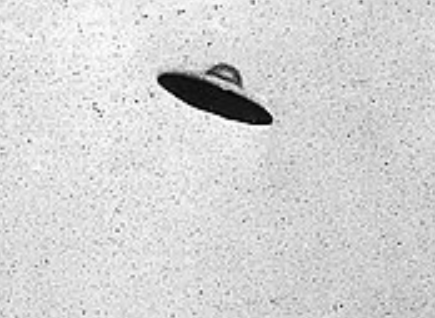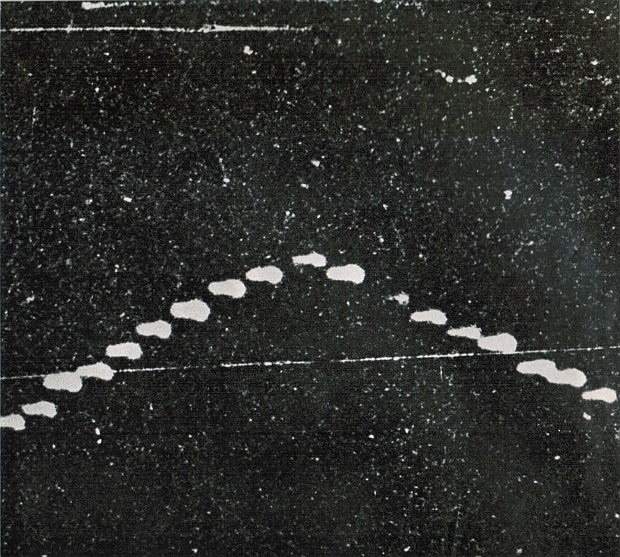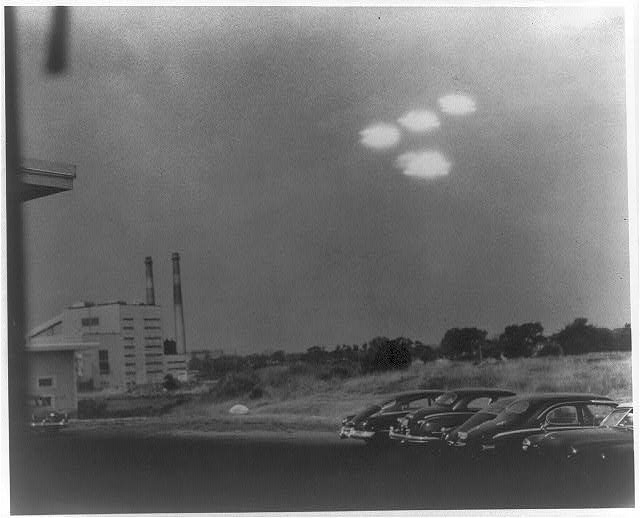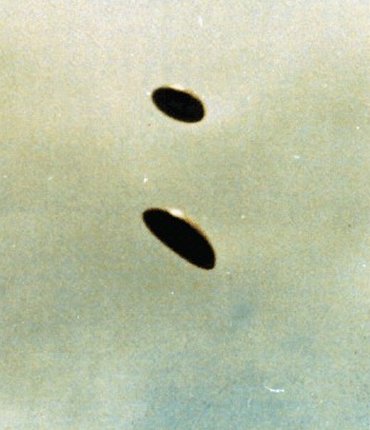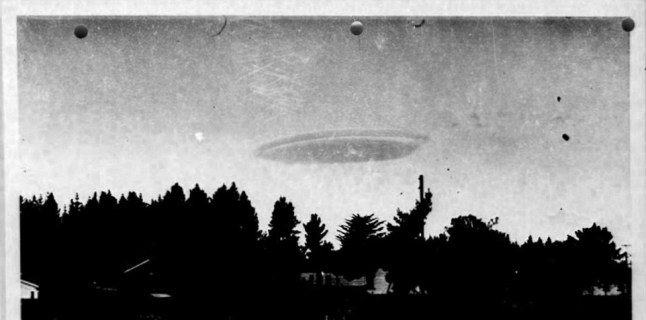
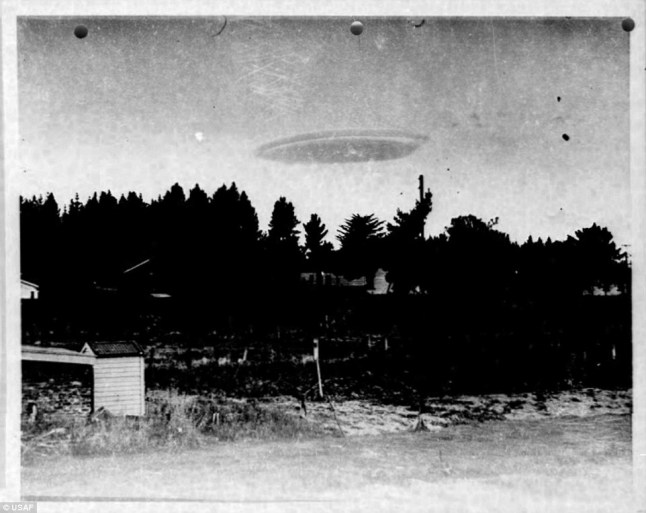
A suspected UFO was photographed in the skies above Auckland, New Zealand in mid-1951. The photograph shows a circular disc-like shape in the sky, which the photographer believed to be a flying saucer.
The image was captured during winter 1951 and shows a lens-shaped object hovering in the sky above the New Zealand landscape.
The photograph was later submitted to the United States Air Force for investigation as part of Project Blue Book, the official USAF study of UFO sightings.
The case was investigated by the United States Air Force as part of Project Blue Book, which examined UFO sightings from 1947 to 1969.
After analysis, the U.S. Air Force concluded that the object photographed over Auckland was not a craft at all, but rather a lenticular cloud—a lens-shaped cloud formation that forms at high altitudes.
The lens-shaped formations occur when moist air condenses at high altitude, particularly when air is pushed up steep slopes by high winds. These clouds can appear stationary and can have a disc-like appearance, leading to occasional misidentification as aircraft or flying saucers.
The photographed object displayed several characteristics consistent with lenticular clouds:
- Shape: Circular, disc-like appearance with smooth edges
- Formation: Lens-shaped, typical of altocumulus lenticularis clouds
- Position: Appeared stationary in the sky
- Environment: Winter conditions, high altitude
EXPLAINED
Project Blue Book investigators concluded that the object was a lenticular cloud, a natural atmospheric phenomenon. The lens-shaped formations are created when moist air condenses at high altitudes, particularly near mountains or steep terrain.
The photographer's identification of the cloud as a "flying saucer" is understandable, given the striking appearance of lenticular clouds and the public fascination with UFOs during the early 1950s.
This case represents one of many instances where natural atmospheric phenomena have been mistaken for unidentified flying objects.