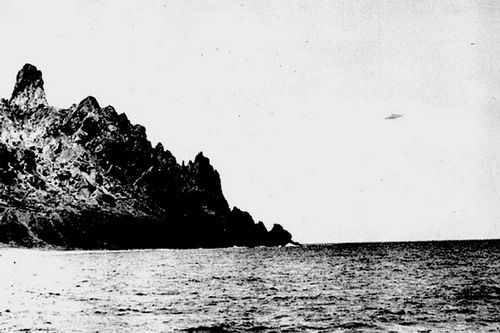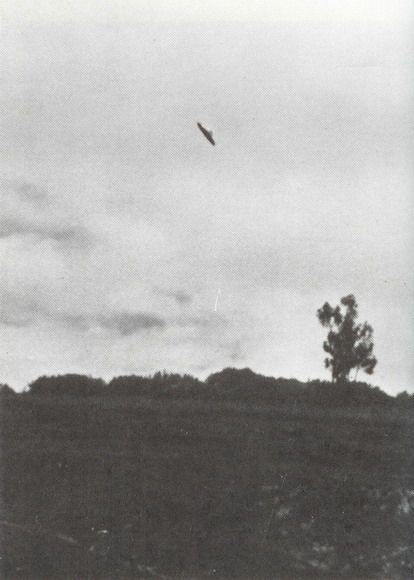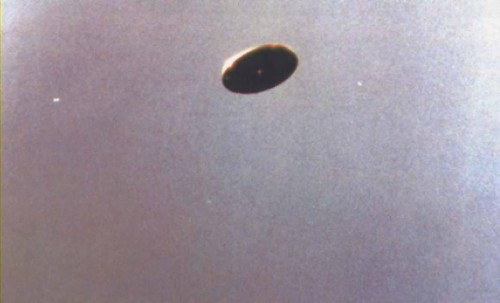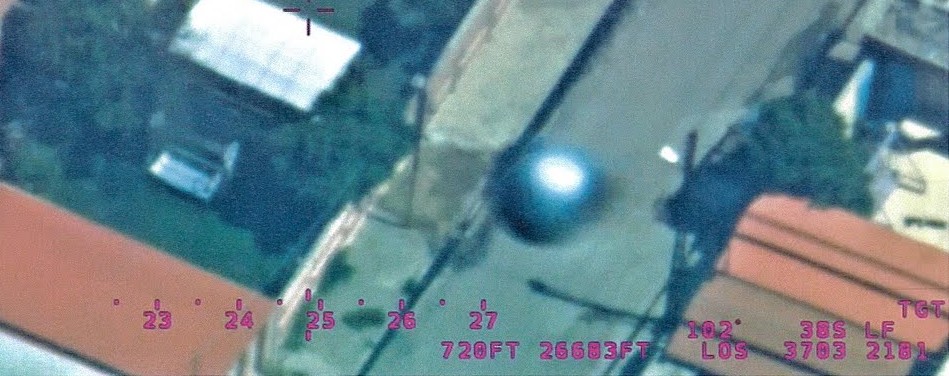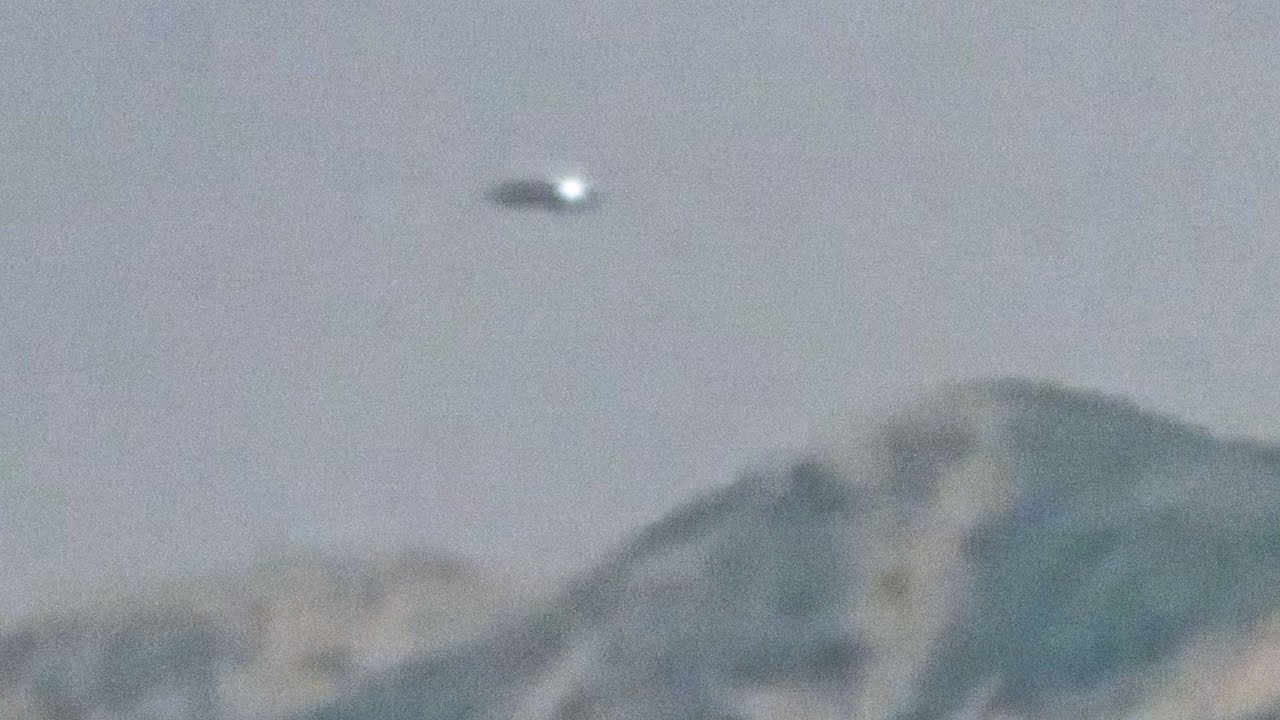
On the morning of April 15, 1966, at approximately 9:45 a.m. Pacific Standard Time, Lee Hansen — a Navy photographer assigned to the Naval Air Station on Catalina Island, California — captured on 8mm color film an object of extraordinary and puzzling characteristics. The island lies approximately 26 miles across the Pacific from Los Angeles, making it a significant and recognizable vantage point along the Southern California coastline. Hansen's official duties as a Navy photographer lent the encounter an immediate institutional credibility: this was not an uninformed civilian observer but a trained documentarian with professional experience in photographic evidence collection.
The object filmed by Hansen was disc-shaped and metallic in appearance, displaying no discernible flight control surfaces, propulsion system, exhaust, or engine housing of any kind. In the footage, the craft is observed in sustained, controlled flight — hovering, advancing, and changing direction with apparent stability — in the absence of any visible mechanical means of lift or thrust. The object's surface reflected sunlight uniformly and consistently across its visible area, consistent with a metallic or highly polished exterior. No sound was reported by Hansen or any witnesses present during the filming.
The footage captured the object over open water and airspace in the vicinity of Catalina Island's harbor and surrounding terrain. Given the island's small landmass and the object's proximity to known vantage points, the duration of the sighting and the quality of the footage are remarkable. Hansen filmed for a sufficient period to document the object's flight characteristics in considerable detail, including its ability to change direction and altitude without the banking or pitching maneuvers that conventional aircraft require to do so.
The absence of visible propulsion is among the most significant aspects of the Hansen footage. Aircraft of the 1960s era — whether piston-engine or early jet — required visible exhaust, propeller systems, turbine housings, or jet intakes that would have been captured on film under the conditions of the sighting. No such features were observed. The object's flight characteristics, as documented in the footage, are inconsistent with any known or theorized aviation technology available to the United States Navy or any other nation at that time.
Hansen reported the encounter through official Navy channels. The footage was submitted for analysis and subsequently became part of the broader body of photographic and film evidence reviewed by military and intelligence analysts during the mid-to-late 1960s, a period that saw one of the most significant surges in UFO reporting in American history — coinciding with the height of Project Blue Book's activity and the escalation of the Vietnam War, which itself generated a considerable volume of UAP-related reports from military personnel in the Pacific and Southeast Asian theaters.
Following Lee Hansen's submission of the footage through Navy channels, the Catalina Island film was reviewed by personnel at the Naval Air Station and subsequently forwarded for analysis at higher levels within the Department of Defense. The Navy's own photographic experts were among the first to examine the footage frame by frame. Unlike the handling of many civilian UFO reports, the fact that the primary witness was an active-duty Navy photographer with professional credentials gave the case an institutional standing that civilian reports typically lacked.
The footage was analyzed using the photographic and optical methods available at the time. Analysts examined the object's apparent size relative to calibrated reference points in the environment, its apparent rate of angular movement across the field of view, and the consistency of its luminous and reflective properties across multiple frames. The metallic appearance and the absence of visible propulsion were noted as anomalous features that were not readily consistent with known aircraft types or atmospheric phenomena.
No propulsion system visible: Frame-by-frame examination confirmed no propeller, jet intake, exhaust plume, or mechanical thrust system was visible under daylight filming conditions. This was inconsistent with any known aircraft photographed under comparable lighting.
No flight control surfaces: The object's disc profile showed no ailerons, rudders, elevators, or other aerodynamic control surfaces. Its flight path changed without the banking or pitch adjustments such surfaces would require.
Uniform metallic reflectance: The object's surface showed consistent reflective properties across its visible area, consistent with a smooth metallic shell rather than a composite structure with distinct mechanical components.
Flight characteristics: The object's ability to hover, advance, and change direction appeared to defy the aerodynamic principles that would govern any conventional craft of comparable size.
The case was included in the broader review of UFO and UAP evidence that occurred during the mid-1960s, a period that saw significant institutional attention to the phenomenon. The 1966 timeframe places this case within the same general window as several other high-profile UFO investigations, including the Westall mass sighting in Australia (April 6, 1966), thexmalt significant wave of reports in the United States and internationally. Analysts reviewing the Hansen footage at Naval facilities and, potentially, at higher levels within the Defense Intelligence Agency and the Office of the Secretary of Defense, would have had access to this broader context.
The disposition of the case within official records — specifically what determination was reached and whether any documentation was retained in military or intelligence files — is among the aspects of this case that remain unresolved. No definitive declassified document specifically addressing the Catalina Island case has been publicly identified in the FOIA record to date, though the broader mid-1960s UFO investigation records held by the Air Force and Navy remain incomplete.
The Hansen footage was captured during one of the most active periods for UFO reporting in American history. Project Blue Book received a record number of reports in 1966, and the phenomenon was receiving serious attention at the highest levels of the Defense Department. This context — combined with the credentials of the witness — placed the Catalina Island footage among the more significant pieces of evidence in the official record during a period when the government's handling of UFO investigations was itself under intense scrutiny.
No public declassified document has been definitively identified that records the formal outcome of the Navy's review of the Hansen footage. The case occupies a somewhat ambiguous position in the available historical record: it was captured by a Navy photographer, submitted through official channels, and analyzed within the defense establishment — lending it a provenance that distinguishes it from civilian reports — yet a definitive statement of the official determination, if one was reached, has not been publicly produced.
Project Blue Book's records for the 1966 period reflect a significant number of unexplained cases. During this era, the Air Force program categorized sightings into three classifications: Identified (conventional explanation determined), Insufficient Information (insufficient data for determination), and Unidentified (no conventional explanation available after exhaustive analysis). The Hansen footage — given the professional qualifications of the witness, the quality of the photographic evidence, and the anomalous nature of the object's characteristics — would appear to be a strong candidate for the Unidentified classification, though this cannot be confirmed without access to the relevant Navy or Air Force files.
The general pattern of mid-1960s official handling of UFO evidence was one of persistent institutional ambiguity. The Condon Committee's review — commissioned by the Air Force in 1966 and released in 1969 — concluded that no scientific value was to be found in continued UFO investigation, leading to the termination of Project Blue Book. However, numerous cases reviewed by Condon's own researchers were classified as unexplained or anomalous, and the committee's methodology and conclusions have been extensively criticized by subsequent analysts. The Hansen footage predates the Condon Committee's work, placing it in an earlier phase of official review.
What can be stated with confidence is that the footage itself has survived in the public domain and that its characteristics — as described by those who have reviewed it — are anomalous by any reasonable standard of 1960s aviation knowledge. The object's disc profile, metallic surface, absence of visible propulsion and control surfaces, and apparently defamiliar flight characteristics represent features that were not associated with any conventional aircraft or natural phenomenon identified during the period.
The Catalina Island UFO footage of April 15, 1966, remains one of the more significant pieces of 1960s UFO film evidence: a Navy photographer, a disc-shaped metallic object with no visible mechanical means of flight, professional-quality footage, and an institutional reporting chain that gives the case a provenance uncommon among the mass of civilian reports from the era.
- Q.01What was the Navy's formal determination regarding the Hansen footage? As an active-duty Navy photographer who submitted film through official channels, there should be an institutional record of review. Has a Navy or Defense Department file on this case been identified in FOIA searches, and if so, what does it contain?
- Q.02Were any radar records generated from Naval Air Station Catalina during the sighting on April 15, 1966? Naval air stations typically maintain continuous radar coverage of their airspace. Were any unidentified returns logged during the period of Hansen's filming, and do any such records survive?
- Q.03Were other Navy or military personnel present at the time of the sighting who could corroborate Hansen's account? If additional witnesses were present at or near the Naval Air Station during the filming, their independent testimony would substantially strengthen the case's credibility and provide additional detail on the object's behavior and characteristics.
- Q.04Has the original 8mm film been preserved, and if so, where? High-resolution digitization of the original footage would allow modern photogrammetric analysis that was not possible with the equipment available in 1966. Frame-by-frame digital enhancement could reveal structural details, surface characteristics, or motion patterns not discernible in existing copies.
- Q.05Was the Hansen footage shared with or reviewed by the Robertson Panel's successor bodies, or included in any subsequent declassified review of UAP evidence? The 1966–1969 period saw several institutional reviews of UFO evidence within the Defense Department. Is there any record of the Catalina Island footage being included in these reviews, and what conclusions, if any, were reached?
- Q.06How does the Catalina Island footage compare to other 1966 Southern California UFO sightings? The Los Angeles basin and the Southern California coastline were among the most active UFO reporting regions during the 1960s. Was the Hansen footage linked or compared to any other sightings in the region during the same period?