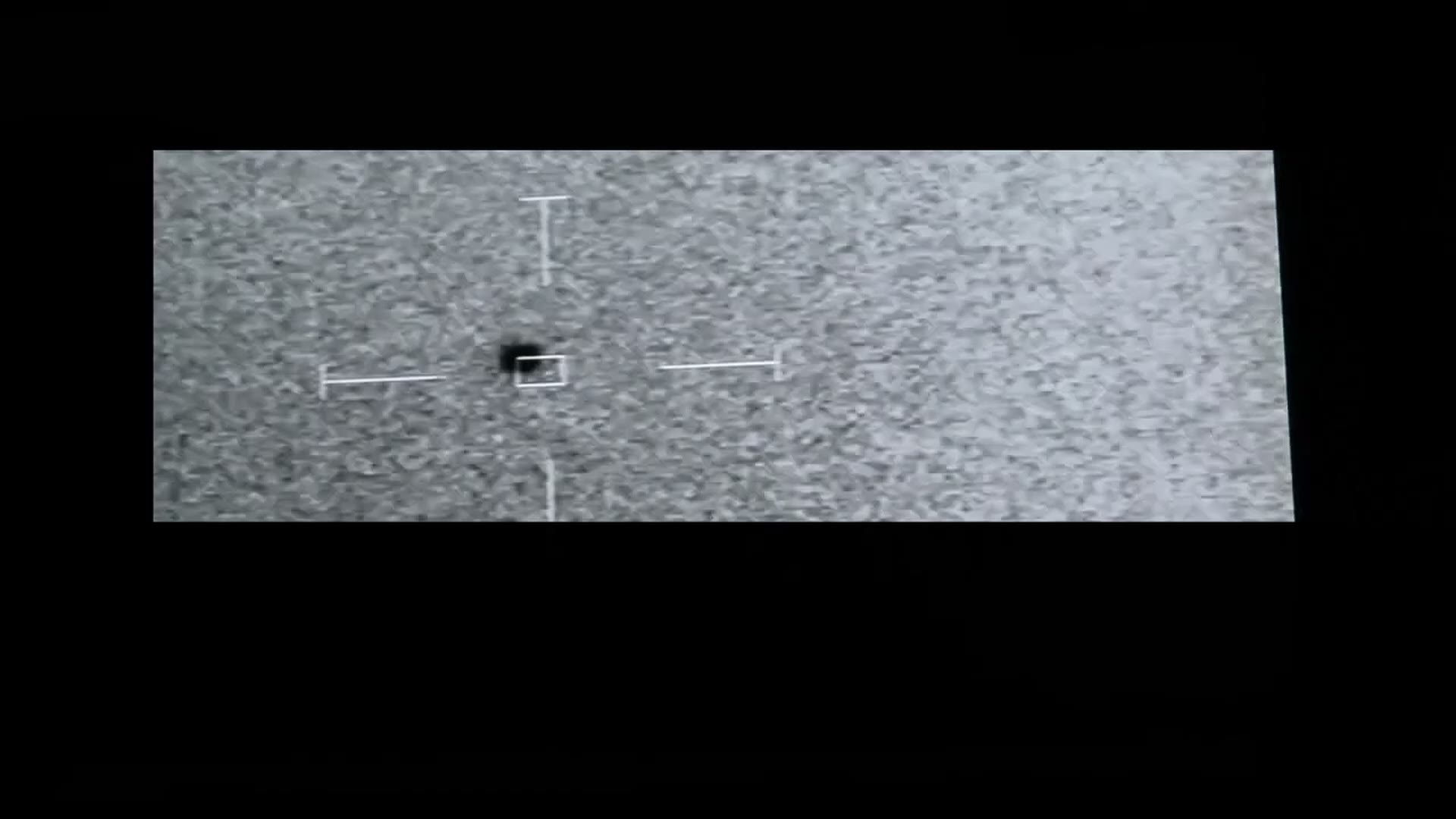
The United States Navy Unidentified Anomalous Phenomena Task Force (UAPTF) transferred this media to the All-domain Anomaly Resolution Office (AARO) in 2022. The footage contained within DOW-UAP-PR123 through DOW-UAP-PR127 was captured contemporaneously in 2019 and consists of secondary captures, recorded via hand-held recording devices, of infrared sensor displays aboard a U.S. military platform. This footage does not represent native primary sensor data, and the secondary recording method introduces limitations in fidelity, resolution, and overall visual quality. Artifacts inherent to filming a screen, such as blurring or flickering, may be present. Low-light conditions at the time of capture influence the overall visual quality of the footage. This media was digitally altered before being reported to AARO, and is presented as it was received.
The case was submitted to the All-domain Anomaly Resolution Office (AARO) for formal assessment as part of the office's centralized UAP reporting pipeline. AARO reviews all reports submitted by military branches, intelligence agencies, and other government bodies, applying standardized analytical criteria to determine whether observed objects or phenomena can be identified as conventional aircraft, drones, atmospheric phenomena, or sensor artifacts, or whether they exhibit genuinely anomalous characteristics warranting further investigation.
This material was among records identified in response to Congressional oversight requests and was publicly released as part of the Department of War's disclosure initiative. The release is intended to promote transparency and enable independent analysis of UAP-related records held by the U.S. government.
DOW-UAP-PR123 (64 sec): 00:00-00:03: An area of contrast is visible near the center of the frame. 00:04-00:07: The area of contrast loses distinctiveness against the background. 00:08-00:25: An area of contrast becomes visible near the center of the frame. The sensor pans and zooms in to focus on the area of contrast, keeping it generally within the center of the frame. 00:25-01:04: The area of contrast remains generally centered within the sensor field-of-view.
DOW-UAP-PR124 (53 sec): 00:00-00:01: An area of contrast remains generally centered within the sensor field-of-view. 00:02-00:29: The sensor zooms in on the area of contrast. 00:30-00:53: The area of contrast loses distinctiveness against the background.
DOW-UAP-PR125 (28 sec): 00:00-00:05: An area of contrast remains generally centered within the sensor field-of-view. 00:06-00:09: The area of contrast tracks left within the sensor field-of-view. 00:10-00:15: The area of contrast loses distinctiveness against the background. 00:16-00:22: An area of contrast appears in the sensor field-of-view. The sensor pans to track it, keeping it generally within the center of the frame. 00:23-00:28: The area of contrast remains generally centered within the sensor field-of-view.
DOW-UAP-PR126 (152 sec): 00:00-00:08: The camera pans against the background, bringing two apparent light sources into frame from the top left corner. The recording device focuses on the light sources, keeping them generally within the center of the frame. 00:09-00:53: The camera pans against the background. As the camera pans, it repeatedly brings several apparent light sources into and out of the frame. 00:54-01:23: The sensor zooms in on the light source in the lower left quarter of the frame, focusing to bring it into the center of the field-of-view. 01:24-02:32: The sensor zooms out and continues to pan to track apparent light sources. As the camera pans, it repeatedly brings several apparent light sources into and out of the frame.
DOW-UAP-PR127 (149 sec): 00:00-00:17: The camera pans to track an apparent light source. 00:18-00:26: No content. 00:27-00:43: The camera pans to track an apparent light source. 00:44-00:47: No content. 00:47-00:49: The camera pans to track an apparent light source. 00:50-00:52: No content. 00:53-00:57: The camera pans to track an apparent light source. 00:57-01:02: No content. 01:02-02:28: The camera pans to track an apparent light source.
This video description is provided for informational purposes only. Readers should not interpret any part of this description as reflecting an analytical judgment, investigative conclusion, or factual determination regarding the described event’s validity, nature, or significance.
The official conclusion of AARO is that this case remains an unresolved UAP report. The available evidence does not provide sufficient information to conclusively identify the phenomenon as any specific conventional platform, nor does it contain observable characteristics that can be definitively categorized as anomalous. The designation "unresolved" reflects the determination that the available evidence is insufficient to reach a positive identification or to rule out conventional explanations.
This case is representative of a category of AARO reports where the duration and quality of the available data are inadequate to support a definitive analytical conclusion. Such cases remain open in AARO's case management system and may be revisited if additional data becomes available.
- Q.01What was the true nature and origin of the observed phenomenon? Without independent sensor data -- including radar tracking, electronic warfare system returns, or corroborating optical observations -- it is impossible to determine the object's range, velocity, altitude, or physical composition.
- Q.02What additional sensor data from the recording platform exists but has not been publicly released? Military and intelligence platforms typically carry multiple sensor systems operating simultaneously. Whether radar, electronic support measures, or other onboard sensors captured contemporaneous data has not been addressed in any official public statement.
- Q.03What information has been redacted from this record, and how does that redaction affect the completeness of the public record? The presence of redacted elements in the released material means that the public cannot fully assess the operational context.
- Q.04Have any subsequent incidents in the same area or involving similar characteristics been linked to this case? A comprehensive cross-referencing of UAP reports with matching signatures has not been conducted publicly.