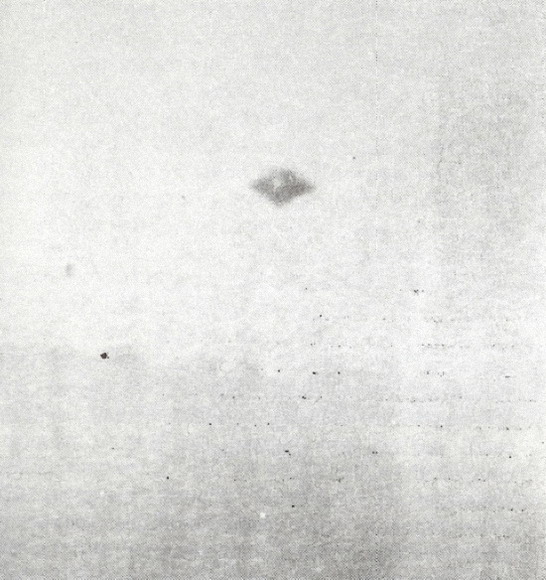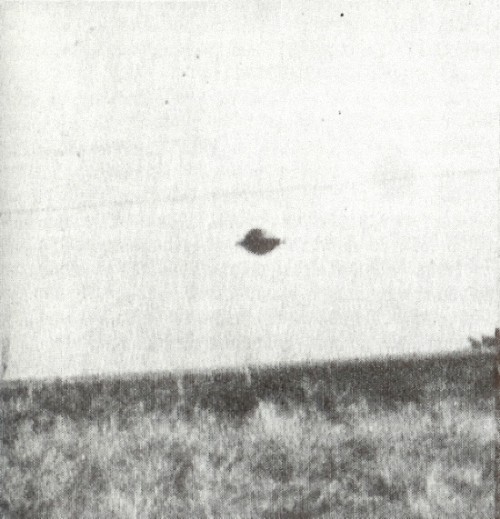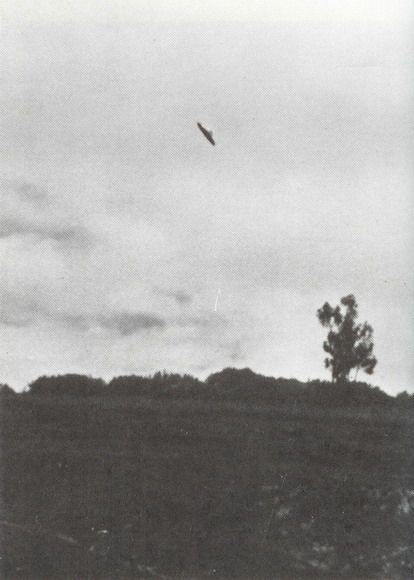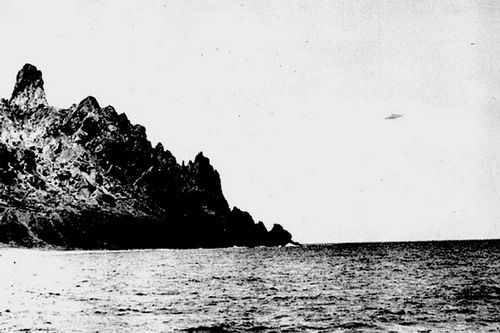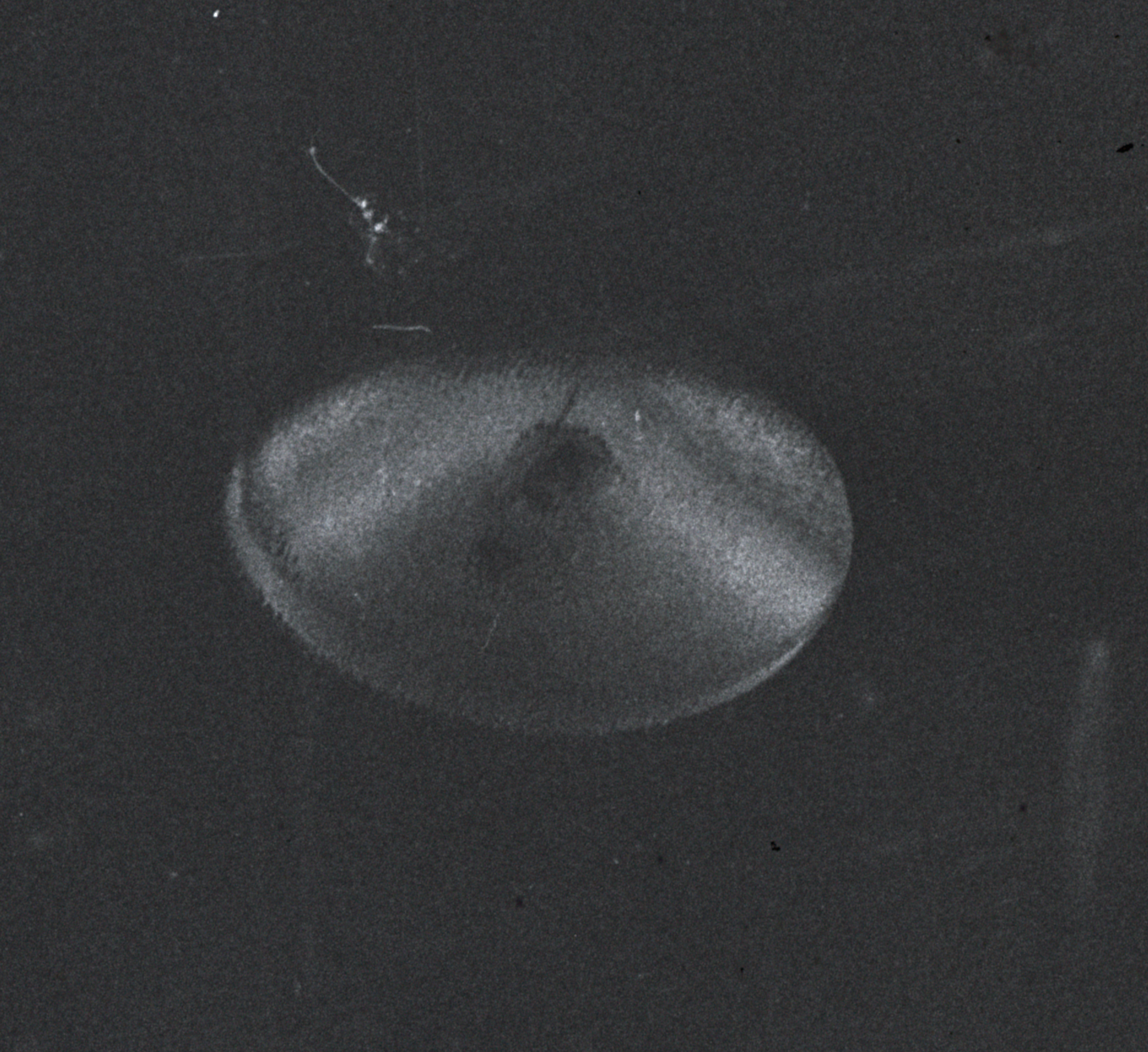
On the morning of September 4, 1971, a twin-engine Canadian Aero Commander F680 aircraft lifted off on behalf of Costa Rica's Instituto Geográfico Nacional (National Geographic Institute) to conduct a routine aerial mapping survey of the Arenal region. The mission was commissioned by the Instituto Costarricense de Electricidad (ICE) as part of preliminary hydrological studies for a planned hydroelectric project near Arenal Volcano. On board were four specialists: aerial photographer and cartographer Sergio Loaiza, geographer Juan Bravo, topographer Francisco Reyes, and the aircraft's pilot. None of the crew reported seeing anything out of the ordinary during the flight.
The aircraft carried a Zeiss RMK A 15/23 mapping camera — a precision, 100-pound instrument donated by the German government and mounted directly to the aircraft floor, aimed vertically downward. Flying at a fixed altitude of approximately 10,000 feet (3,048 meters), the automated camera fired at regular intervals of roughly 13–17 seconds, producing a continuous sequence of high-resolution black-and-white frames covering a swath approximately seven miles square per image. The system recorded roads, tree lines, animals, and fine topographical detail with exceptional clarity.
At approximately 8:25 a.m. local time, as the aircraft transited over Lago de Cote — Costa Rica's largest natural freshwater lake — the camera captured frame number 300 in the sequence. When the film was developed and the cartographers reviewed the contact prints, they found something that did not belong: a sharply focused, metallic disc-shaped object hovering above the dark surface of the lake, visible in that single frame alone. The preceding frame and the following frame showed only the lake and jungle. The object was not seen by any crew member at the time of capture.
The lake itself sits in a volcanic crater between Arenal Volcano and Tenorio Volcano in the northern highlands of Alajuela province — a region considered sacred by the indigenous Maleku people. Local farmers in the surrounding area had, over the years prior to 1971, reported unusual objects moving on and below the surface of the lake, though no formal report had ever been filed with authorities. These accounts gained renewed attention after the photograph became public.
Upon discovery of the anomalous image, the scientists and administrators of the ICE hydroelectric project reportedly instructed Sergio Loaiza and his colleagues to remain silent about what the photograph appeared to show. The original negative was retained by the Costa Rican government and lodged in the national archive, where it has remained ever since — establishing an unbroken and unimpeachable chain of custody that has made the image one of the most institutionally credible UFO photographs ever documented.
In 1979 — eight years after the image was captured — project team member Ricardo Vílchez, a Costa Rican UFO researcher, obtained a copy of the photograph and submitted it to Ground Saucer Watch (GSW), a U.S.-based organization that performed early computer analysis on UFO imagery. GSW conducted digital processing of the print and concluded the object appeared to be a genuine, three-dimensional structured craft, not a photographic artifact. Their analysis attracted wider attention within the international UFO research community.
The most rigorous scientific examination followed in 1987, when Dr. Richard F. Haines — a research scientist and former NASA Ames Research Center employee — and Dr. Jacques F. Vallée — a French-American computer scientist, astronomer, and venture capitalist widely regarded as one of the foremost scientific investigators of the UFO phenomenon — jointly obtained the original uncut negative from the Costa Rican government. They also secured the frames immediately preceding and following frame 300, allowing them to rule out any sequential contamination of the film strip.
Haines and Vallée had the original negative digitized by a specialist firm in France that routinely processed satellite imagery — a cutting-edge technique for the era. Their analysis examined the object's density profile, edge sharpness, shadow consistency, and tonal gradations against the known photographic characteristics of the camera and film stock. Their findings were published in the peer-reviewed Journal of Scientific Exploration in 1989, in a paper titled "Photo Analysis of an Aerial Disc Over Costa Rica." Vallée obtained the original negative of the photo taken before and after the one in question. Both were blank — showing only lake and jungle — confirming the object appeared and vanished between two consecutive automated exposures.
The negative and all associated original materials continue to reside in Costa Rica's national archives, available for institutional study, and have never been altered, sold, or transferred to private hands.
In summary, our analyses have suggested that an unidentified, opaque, aerial object was captured on film at a maximum distance of 10,000 feet. There are no visible means of lift or propulsion and no surface markings other than dark regions that appear to be non-random... There is no indication that the image is the product of a double exposure or a deliberate fabrication.
— Dr. Richard F. Haines & Dr. Jacques F. Vallée, Journal of Scientific Exploration, Vol. 3, No. 2, 1989The 1989 Haines–Vallée analysis remains the definitive scientific study of the image. Their conclusions are clear: the object is a real, three-dimensional, opaque structure captured on film. The analysis ruled out double exposure, deliberate fabrication, film defects, lens artifacts, and processing errors as explanations. The object shows tonal gradations consistent with a solid, reflective surface and appears in sharp focus — consistent with the camera's optical characteristics at the estimated distance.
No conventional aerial or ground-based object of known type has been matched to the image. A subsequent counter-hypothesis proposed by the Rocky Mountain Paranormal Research Society in 2013 — that the image was caused by a chipped lens element in the Zeiss camera — was challenged by researchers, who noted that no other frame in the survey sequence shows a comparable artifact, and that no photographic evidence of such an effect has been demonstrated using the same camera model.
The case carries no official government determination of status, as Costa Rica did not operate a formal UFO investigation program equivalent to the United States' Project Blue Book. The image resurfaced prominently in international media in April 2021, when it was featured in a New Yorker article on the Pentagon's UAP disclosure program, introducing it to a new generation of researchers and observers. UFO journalist Leslie Kean — who co-authored the landmark 2017 New York Times investigation into the Pentagon's secret UAP program — has described the Lake Cote photograph as the best official UFO photograph ever made public, citing its institutional provenance and the absence of any credible natural or technical explanation.
- Q.01Why did the object appear in only a single frame — between two consecutive automated exposures separated by 13–17 seconds — and leave no trace in adjacent frames?
- Q.02Was the craft entering or exiting Lake Cote at the moment of capture, and do its movements relate to the longstanding local reports of objects beneath the lake's surface?
- Q.03What accounts for the absence of a shadow on the lake surface below the object, and what does this imply about its true altitude at the time of photography?
- Q.04Why were the four crew members aboard the aircraft ordered to remain silent after the photograph was developed — and what specifically did the ICE project administrators learn that prompted this suppression?
- Q.05Are there additional classified government records or internal ICE project reports pertaining to this incident that have never been made public?
- Q.06What is the origin and identity of the objects that local Maleku and farming communities reported seeing on and beneath the surface of Lake Cote in the years surrounding this event?
- Q.07Could a full spectral and photogrammetric analysis of the original negative using modern forensic imaging techniques yield additional data about the object's material composition and precise dimensions?