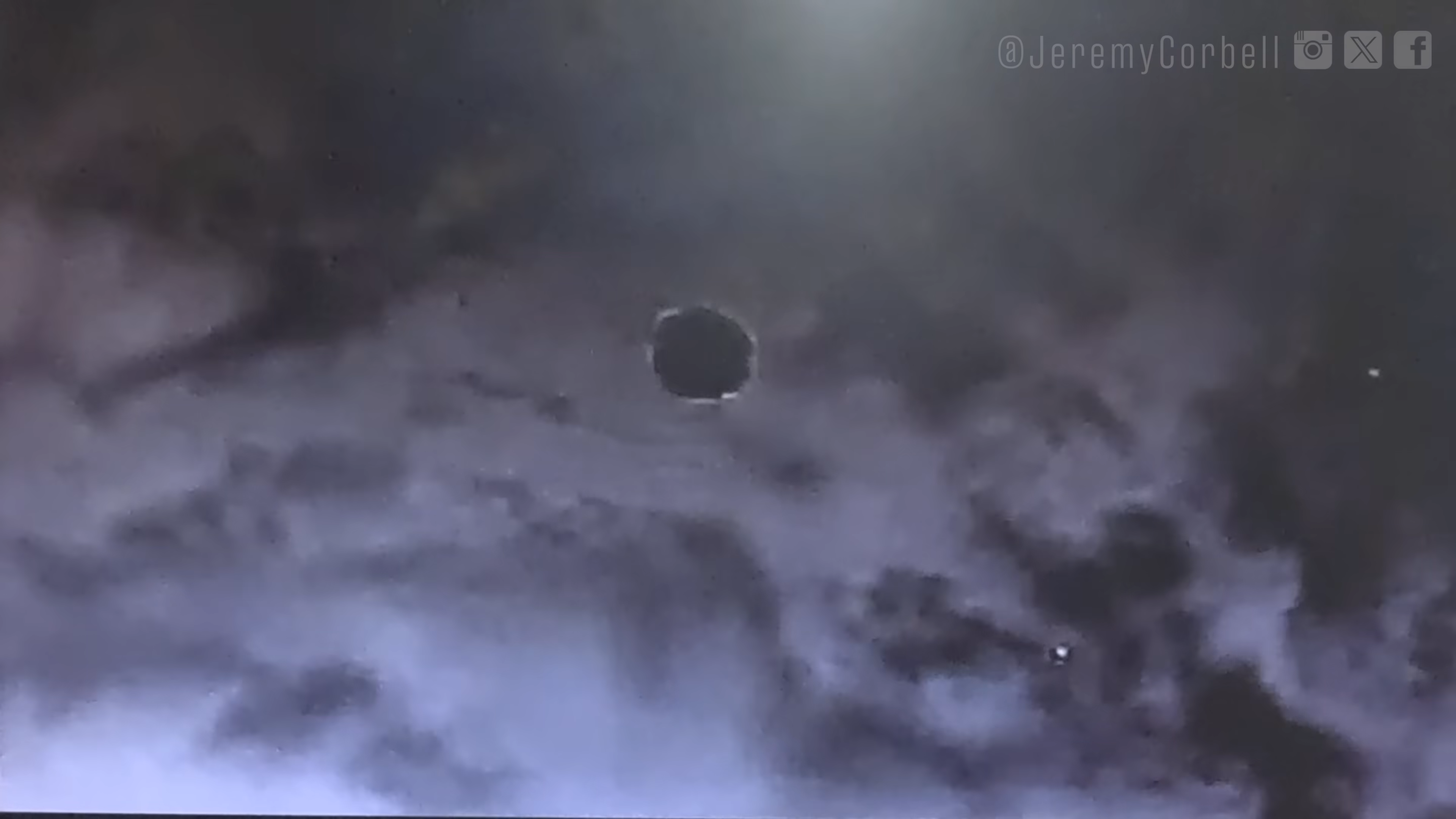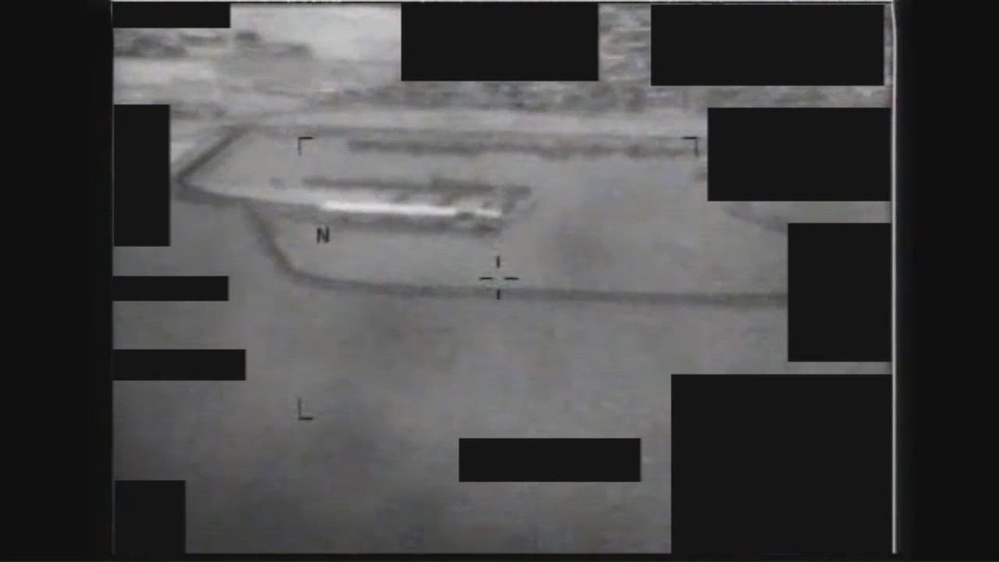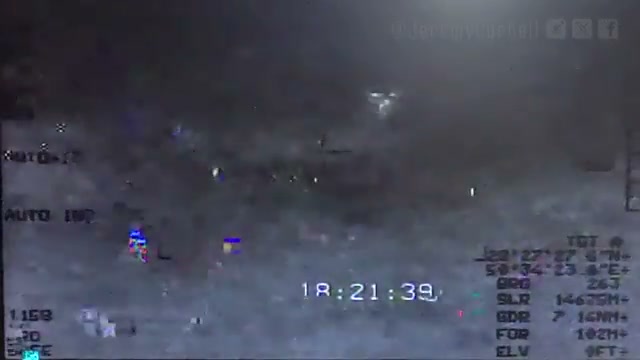
On August 23, 2012 at 18:21 UTC, an MQ-1 Predator drone operating under the U.S. Air Force captured FLIR footage of three unidentified objects over the Persian Gulf at coordinates 28°27'17.0"N, 50°33'37.0"E. The drone's sensor operators observed and actively tracked the objects, which were officially catalogued within Intelligence Community investigations as "orbs" flying in formation.
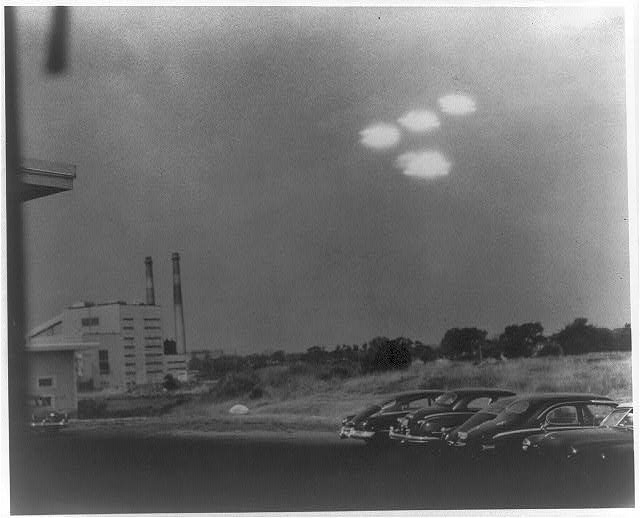
The roughly one-minute footage shows three distinct objects holding a triangular formation. They move in a coordinated pattern, with one orb periodically dropping behind the other two before accelerating forward to rejoin them. Corbell and Knapp described this movement as almost "playful" while still showing intelligent, coordinated control.
The objects kept equal distances from each other throughout the observation and showed no visible wings, tails, fins, or exhaust. The footage reveals abrupt directional changes and what looks like instantaneous acceleration when the trailing orb rejoins the formation. None of the three objects produced thermal signatures consistent with conventional aircraft engines.
Official designation of UAP was made by the United States Intelligence Community and the Department of War. This designation is currently maintained.
According to documentation obtained by Corbell and Knapp, the case was formally investigated and catalogued within Intelligence Community channels. The objects were designated as UAP by the Intelligence Community and the Department of War. The platform was identified with high confidence as an MQ-1 Predator.
The documentation notes that the objects were actively tracked in real time by the drone's operators and appeared to demonstrate abrupt directional changes and intelligent control. The absence of any traditional propulsion or thermal signatures was specifically flagged as an anomalous characteristic requiring further investigation.
The Persian Gulf region represented a significant UAP hotspot even at the time of this recording. Personnel aboard U.S. Navy vessels operating in the region have reported multiple encounters with bright, unexplained objects in the sky. The area between Saudi Arabia and Iran has since become recognized as one of the most active regions for military-documented UAP encounters, with numerous additional cases recorded in subsequent years.
Corbell and Knapp reported that the video was placed in a separate archive reserved for evidence of objects that cannot be dismissed as birds, balloons, or other conventional items. The case was assigned a classification track distinct from routine contact reports.
The Department of Defense and Department of War maintain this event as an unresolved UAP case. The three objects remain unidentified, with no official explanation accounting for their formation flight, coordinated maneuvers, and lack of conventional propulsion.
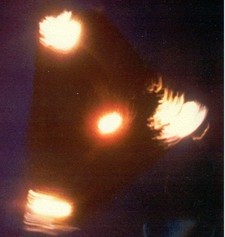
George Knapp, speaking on the WEAPONIZED podcast, emphasized that this was not a case of a single triangular craft with lights at each vertex, a common UFO report, but rather three distinct orbs maintaining intentional formation flight. The movement of one orb between the others showed clear separation and ruled out the idea of a single solid craft. Knapp stated: "This is a military recorded sensor generated image of what looks like a triangular UFO, like one big triangular craft with dots on each of the three ends. And clearly, you watch this, and that's not what it is."
The case highlights the concentration of UAP activity in the Persian Gulf, one of the most heavily surveilled airspaces on the planet. Unexplained objects operating where U.S. military assets maintain continuous sensor coverage raise significant security concerns that remain unresolved.
- Q.01What were the three orbs observed in the Persian Gulf? The objects were officially classified as UAP, but their identity, origin, and purpose remain entirely unknown. The coordinated formation flight suggests intelligent control, but whether that control is remote, autonomous, or crewed has not been determined.
- Q.02What propulsion system enables the observed acceleration and maneuver performance without detectable thermal signatures? One of the orbs demonstrated what appears to be instantaneous acceleration when moving between positions in the formation, a performance characteristic inconsistent with known aircraft propulsion technology.
- Q.03Were the three objects independently tracked by other sensor platforms in the Persian Gulf region at the time of the encounter? The Persian Gulf is one of the most sensor-dense environments on Earth, with naval vessels, aircraft, and shore-based radar systems maintaining continuous surveillance. Whether any independent tracking data exists that could provide additional information about the objects' performance characteristics has not been publicly established.
- Q.04What is the relationship, if any, between the objects in this case and the broader pattern of UAP activity documented in the Persian Gulf and Middle Eastern theaters? Multiple UAP cases have been documented in this region by military sensors, suggesting the area may be a persistent locus of unidentified aerial activity requiring systematic investigation.
- Q.05Why was this footage placed in a separate archive for non-conventional objects rather than processed through standard contact reporting channels? The existence of a separate classification track for evidence that cannot be explained as conventional objects implies an institutional recognition of a distinct category of unidentified phenomena, but the criteria and procedures governing this classification system have not been publicly disclosed.