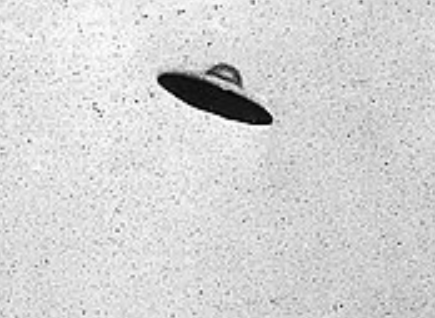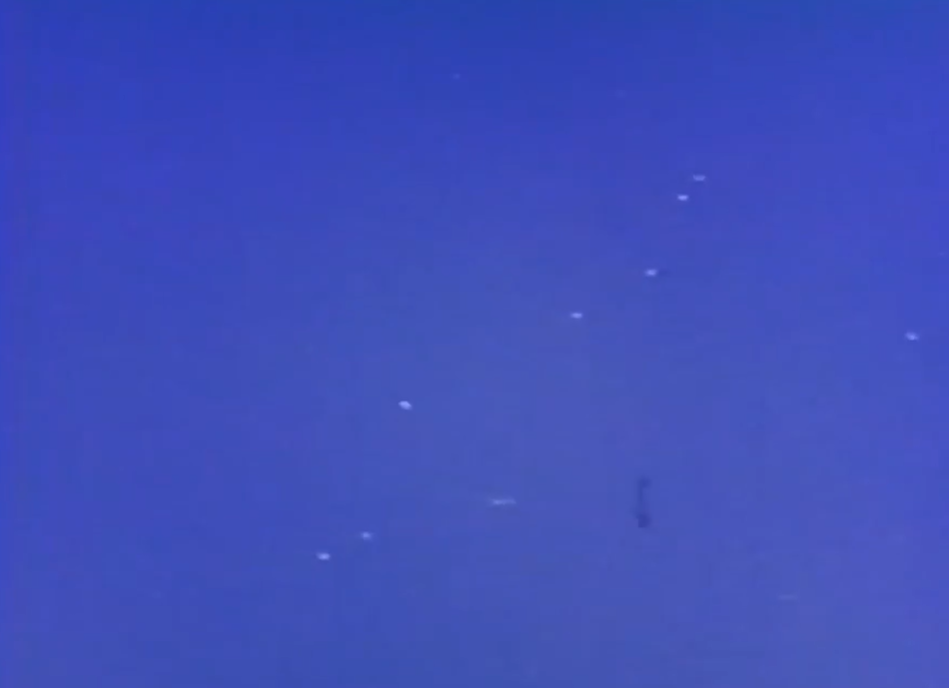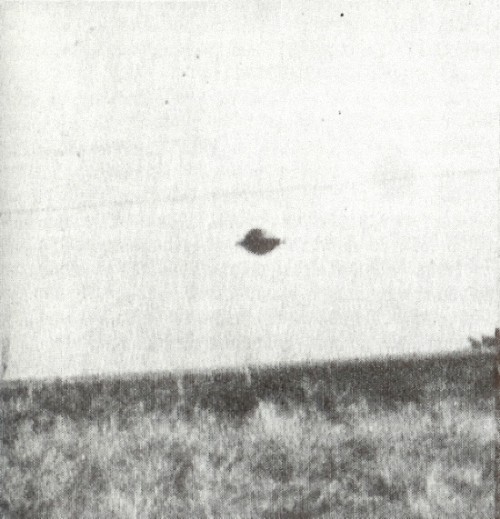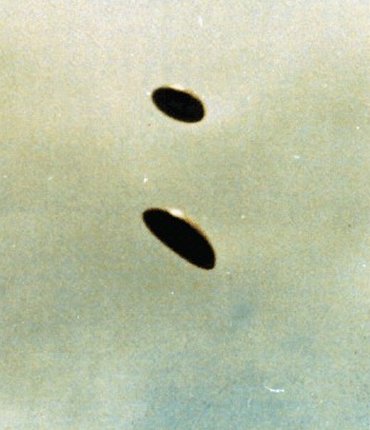
On the morning of August 15, 1950, Nick Mariana, general manager of the Great Falls Electrics minor league baseball team, was inspecting Legion Stadium in Great Falls, Montana before a game when he observed two bright silvery objects flying in the sky to the northwest. Mariana, who kept a 16mm movie camera in his car for personal use and sports documentation, retrieved the camera and filmed the objects for approximately sixteen seconds before they moved out of effective range. His secretary Virginia Raunig was present and also observed the objects, providing independent witness corroboration of what was captured on film.
The film shows two bright, roughly circular objects moving in apparent formation against a clear sky. The objects appear bright and reflective, maintaining a consistent separation as they move across the field of view before gradually diminishing to the point where they are no longer visible. Mariana reported that he could see the objects more clearly before he began filming, when they appeared to be rotating as they flew, and that they had a spinning or gyroscopic motion visible to the naked eye that is not clearly resolvable in the 16mm footage due to the objects' small angular size when captured on film.
Mariana submitted the film to the U.S. Air Force through official channels in the fall of 1950. When the film was returned to him, he maintained that several frames from the beginning of the sequence, in which the objects were at their largest apparent size and closest approach, had been removed. The Air Force denied removing any frames. This allegation of selective frame removal became one of the most persistent controversies in the case and was never definitively resolved. Mariana's claim rested on his recollection that the objects had been much larger and more detailed in the opening frames than those returned to him showed.
The Great Falls incident took place in close proximity to Malmstrom Air Force Base, a major Air Force installation with significant nuclear and strategic importance. The base operated fighter interceptors and various military aircraft throughout the area. Blue Book investigators and independent analysts both noted that two F-94 Starfire jet fighters had taken off from Malmstrom at approximately the time Mariana filmed the objects, raising the possibility that the filmed objects were the F-94s filmed at distance and at an angle that made their jet exhausts or fuselages appear as bright reflective discs rather than recognizable aircraft shapes.
Mariana firmly rejected the F-94 explanation, stating that he had seen aircraft taking off from Malmstrom on many occasions and that the objects he filmed bore no resemblance to aircraft of any kind. He maintained that the objects were silvery, disc shaped, and rotating, with characteristics unlike any aircraft he had ever observed. His account remained consistent across multiple interviews spanning several decades, and he never wavered on the core details of the observation despite sustained official pressure to accept the F-94 explanation.
Project Blue Book examined the Mariana film and interviewed both Mariana and Virginia Raunig. The program's investigators noted the presence of the two F-94 Starfire aircraft that had taken off from Malmstrom at approximately the time of the sighting and offered this as the most likely explanation for the filmed objects. Blue Book's conclusion was that the objects were the F-94s seen from below at an angle that produced the bright reflective appearance captured on film. This conclusion was accepted as the official explanation and the case was marked as identified.
The Robertson Panel, which convened in January 1953 and reviewed the Great Falls film alongside the Tremonton film as the two primary pieces of UAP motion picture evidence then available, gave the Great Falls footage considerable attention. Panel members viewed the film and debated the F-94 hypothesis. The panel ultimately accepted the aircraft explanation as plausible, though the deliberations noted that the objects' apparent motion and brightness were not inconsistent with reflective discs if the F-94 hypothesis was incorrect. The panel's acceptance of the aircraft explanation was partly shaped by its broader mandate to find conventional explanations for the best available UAP evidence.
Independent analyses of the Great Falls film reached more varied conclusions. Dr. Robert M.L. Baker Jr., who also analyzed the Tremonton film, examined the Great Falls footage and concluded that the objects' angular velocity and brightness were not fully consistent with the F-94 aircraft at the positions they would have occupied if they were the filmed objects. Baker's analysis noted that the geometry of the Malmstrom takeoff pattern and the direction of the filmed objects' motion did not align precisely with what would be expected if the objects were the known departing F-94s.
The allegation that frames were removed from the beginning of the film sequence remains unresolved. Blue Book investigators denied removing any frames and stated that the film was returned in its entirety. Mariana's assertion that the opening frames showed the objects at much larger size and with visible shape detail was never tested against any preserved evidence because no copy of the film before Air Force processing was retained. This chain of custody gap means the frame removal question cannot be resolved from the surviving evidence record.
The University of Colorado UFO Project's review of the Great Falls film was less favorable than its assessment of the McMinnville photographs, with Condon Report analysts generally accepting the F-94 explanation while noting residual uncertainties about the precise flight path geometry. The case thus received a formally identified disposition from both Blue Book and the Condon Report while retaining significant analytical doubts that the identified explanation fully accounted for all observed characteristics.
Project Blue Book's official conclusion was identified, specifically two F-94 Starfire jet aircraft departing Malmstrom Air Force Base. This represents one of the small number of cases in the early UAP film record where a specific conventional identification was formally offered rather than the unidentified designation. The identified conclusion was accepted by both the Robertson Panel and the Condon Report's review, giving it broader official endorsement than most cases received.
The robustness of the F-94 explanation rests on the coincidence of timing and location: two aircraft of known type were airborne in the relevant area at the relevant time. What it does not fully account for is Mariana's direct rejection of the aircraft identification by a witness who had extensive familiarity with Malmstrom's flight operations, Baker's angular velocity analysis suggesting geometric inconsistency with the F-94 departure path, and the disputed frame removal allegation. These residual problems with the official explanation have kept the case active in the research literature despite its formally identified status.
The Great Falls film alongside the Tremonton film represents the totality of the authenticated motion picture UAP evidence reviewed by the Robertson Panel, and both films influenced American UAP policy for a generation after their analysis. The Robertson Panel's handling of these two films, shaped by national security imperatives rather than purely by scientific evidence, established the institutional template for how UAP evidence would be processed and communicated publicly for the following sixteen years. Understanding the Great Falls case is therefore inseparable from understanding the history of American government UAP policy.
The frame removal controversy, if Mariana's account is accurate, would represent the earliest documented instance of government alteration of UAP film evidence in American history. The inability to resolve this question from the surviving evidence record illustrates the fundamental vulnerability of UAP evidence when it passes through official channels without independent verification of its completeness before and after processing. This custody vulnerability recurs throughout the history of American UAP documentation and remains an unaddressed institutional problem in the current era of military sensor UAP data.
- Q.01Can the precise departure path and position of the two F-94 aircraft be reconstructed from Malmstrom Air Force Base flight records for August 15, 1950? The F-94 explanation depends on a specific flight path geometry that would place the aircraft at the bearing and elevation visible in Mariana's film at the time of filming. Whether Malmstrom's departure logs and tower records from that date were systematically compared to the film's geometric requirements in a formal analysis has not been established in publicly available accounts of the investigation.
- Q.02Did any frames exist at the beginning of the film sequence showing the objects at closer range, and if so what happened to them? Mariana's claim that the objects were much larger in the opening frames he submitted than in those returned to him is either accurate or not, and the answer has significant consequences for the case's interpretation. Whether any copy of the submitted film was made before Air Force processing began, and whether any independent record of the film's length before and after processing exists in any archive, has not been publicly established.
- Q.03Does Baker's angular velocity analysis of the film survive in a form accessible to modern reanalysis? Baker's conclusion that the filmed objects' motion was geometrically inconsistent with the F-94 departure path was presented to a congressional subcommittee in 1968 but the full methodology and data were not published in a peer reviewed form. Whether the underlying calculations and film measurements Baker used are preserved and accessible to modern researchers who could replicate and evaluate them has not been publicly established.
- Q.04What did Virginia Raunig describe independently before she had any opportunity to compare her account with Mariana's? Raunig was a corroborating witness whose independent description of the objects would constrain the range of possible explanations. Whether her account was recorded before she had discussed the details with Mariana, and what specific visual characteristics she described, has not been fully documented in publicly available accounts of the case's investigation.
- Q.05What does the original 16mm film stock show under modern high resolution scanning? The film was shot on commercially available 16mm color stock. Modern high resolution scanning of the original negative or the earliest generation print available could extract significantly more detail from individual frames than was possible with 1950s projection and analysis technology, potentially clarifying the objects' apparent shape, edge characteristics, and rotation properties that Mariana described seeing with the naked eye.
- Q.06What institutional lessons should be drawn from the Great Falls case about the need for independent verification of UAP evidence before it enters official processing channels? The unresolvable frame removal controversy exists because no independent record of the film's condition before Air Force processing was retained. In the current era of digital sensor data and cryptographic verification, it is technically straightforward to create tamper evident records of UAP sensor data that would prevent the kind of unverifiable chain of custody dispute that permanently compromised the Great Falls evidentiary record. Whether AARO and the military services have implemented such protections for UAP sensor data collected today is a question with direct implications for the long term integrity of the modern UAP evidence record.