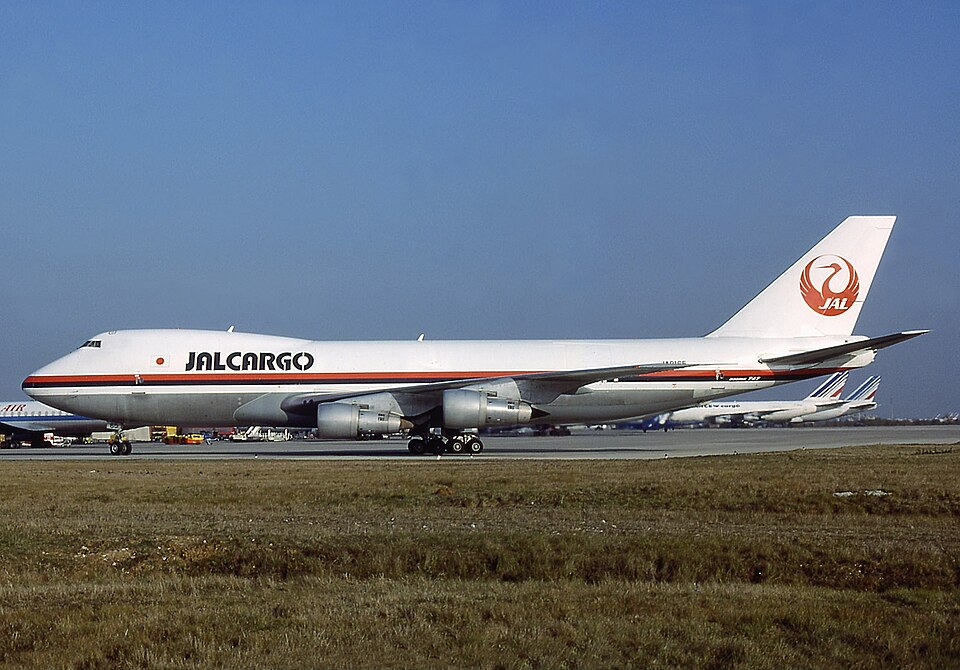
On November 17, 1986, Japan Airlines cargo flight JAL1628 was en route from Reykjavik, Iceland to Anchorage, Alaska, carrying a shipment of Beaujolais Nouveau wine. The aircraft — a Boeing 747-200F — was commanded by Captain Kenju Terauchi, a veteran pilot with approximately 29 years of flight experience and over 10,000 hours in type. Flight engineer Yoshio Tsukuba and copilot Takanori Tamefuji were also present on the flight deck.
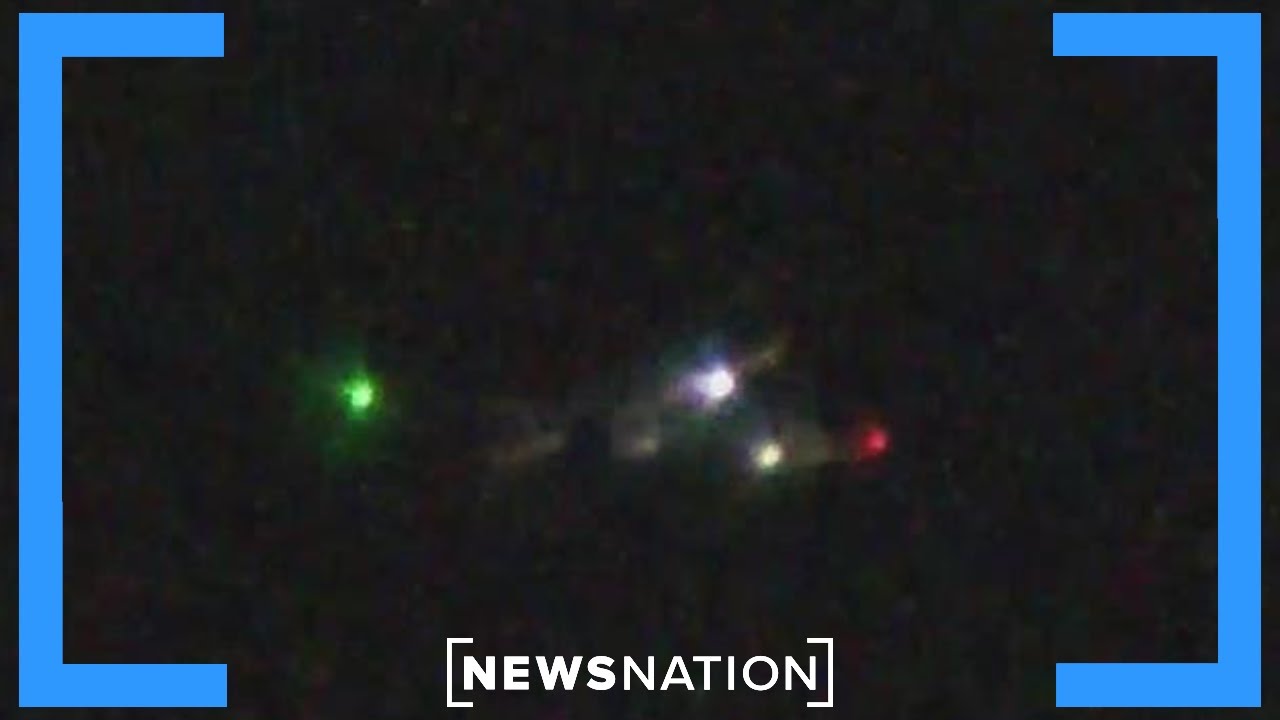
At approximately 5:09 p.m. local time, while cruising at 35,000 feet over northeastern Alaska near Fort Yukon in darkness, Captain Terauchi first noticed lights ahead and below the aircraft. He initially assumed they were traffic from military aircraft in the area. Over the following minutes the lights did not behave as expected — instead of passing, they maintained position relative to the 747 and appeared to be tracking or escorting the aircraft. Terauchi reported the objects to Anchorage Air Traffic Control and ATC began monitoring the situation with ground radar.
What followed over the next approximately 50 minutes was one of the most extended and detailed close-encounter reports ever made by professional aviation crew in controlled airspace with active radar contact. Captain Terauchi described a sequence of encounters: first two small craft flying in formation ahead of the aircraft, displaying intense clusters of lights with what he described as nozzle-like exhaust ports firing amber and white jets of flame. The crew reported feeling heat on their faces from these lights despite the intervening cockpit glass and the minus-60-degree Fahrenheit outside air temperature at 35,000 feet.
The most extraordinary element of the encounter came when Captain Terauchi reported that behind the two smaller objects, a vastly larger structure became visible — described as a gigantic, dimly-lit object that he estimated to be larger than two aircraft carriers placed side by side. This massive object was apparently obscured against the dark sky and was perceived more as an enormous shadow blocking the stars behind it than as a directly illuminated craft. Terauchi later produced detailed hand-drawn illustrations of both the smaller escort craft and the large object, which were included in official FAA documentation.
Anchorage ATC tracked a radar return corroborating the JAL1628 crew's report of a large object in their vicinity during part of the encounter. A military radar at Elmendorf Air Force Base also reportedly acquired a split return on the radar screen — an indication of the 747 and a separate contact — during the encounter period. The crew requested and received a change of altitude and heading. When another aircraft was vectored to the area to intercept, the objects departed. The entire encounter covered an area from the Alaska-Yukon border to near Fairbanks before the objects disappeared.
The Federal Aviation Administration (FAA) conducted an investigation of the JAL1628 incident, which was unusual in its scope and unusually transparent in its public communication given the sensitivity of aviation UAP cases. FAA Division Chief John Callahan oversaw the initial collection of evidence, which included radar tapes from Anchorage ATC and Elmendorf AFB, the crew's formal report, and ATC audio recordings from the encounter. Callahan later became a significant witness in his own right, testifying publicly that he briefed the CIA on the case and was subsequently told by a CIA officer that the meeting never happened and that the evidence was to be treated as classified.
The FAA's official investigation was reviewed by its Alaskan region and transmitted to Washington. The agency ultimately issued an inconclusive determination, acknowledging the encounter but offering no definitive identification of the objects. The radar data was described as ambiguous — the split return at Elmendorf that appeared to show a separate contact near JAL1628 was characterized by some FAA analysts as potentially a radar artifact, though this characterization was disputed by Callahan and other personnel who reviewed the original tapes.
The Scientific Study of Unidentified Flying Objects — the Condon Report — was no longer active in 1986, and no formal U.S. government scientific program existed to investigate such cases at the time of the JAL1628 encounter. The Air Force's Project Blue Book had been shuttered in 1969. The case thus fell into an institutional gap: too significant to be simply filed and ignored given the quality of the witnesses and the radar data, but with no existing official scientific framework to analyze it rigorously.
Captain Terauchi provided extensive formal documentation of the encounter, including detailed technical drawings of both the small escort craft and the large mothership-type object. His account was comprehensive, internally consistent, and delivered with the measured precision of an experienced aviator making an official report. Japan Airlines, however, subsequently reassigned Terauchi to a desk job — a professional consequence that he and observers attributed to embarrassment over the public attention the case received, a response that effectively penalized him for honestly reporting what he and his crew had experienced.
The case was later reviewed by independent aviation safety researchers including Dr. Richard Haines, a retired NASA research scientist who founded the National Aviation Reporting Center on Anomalous Phenomena (NARCAP). Haines examined the radar data and crew testimony in detail and concluded the encounter represented a genuine, unidentified aerial object that cannot be attributed to any known natural or artificial phenomenon. NARCAP's analysis of the case remains one of the most technically rigorous post-hoc investigations of a pilot UAP encounter in aviation safety literature.
The FAA's official conclusion was inconclusive — no conventional identification of the observed objects was produced, and the radar data was characterized as ambiguous rather than definitive. The case was not formally closed as a misidentification, and no official explanation has ever been produced that accounts for the 50-minute duration of the encounter, the corroborating radar contacts at multiple facilities, the crew's consistent detailed testimony, or the heat reportedly felt through the cockpit glass from the objects' lights.
Captain Terauchi's credibility as a witness has been consistently assessed as exceptional by researchers across the ideological spectrum of UAP inquiry. His 29 years of professional aviation experience, his detailed and technically precise reporting, his willingness to produce formal documentation including technical drawings, and his acceptance of the professional consequences of his disclosure all contribute to an assessment of him as one of the most credible aviation UAP witnesses in history.
The claim of CIA involvement in suppressing the radar data — made under oath and on the public record by FAA Division Chief John Callahan years after the incident — represents one of the most significant official-source allegations of government UAP evidence suppression ever made. Whether this allegation is accurate, whether the classified radar tapes still exist in any government archive, and whether those tapes would resolve the ambiguity of the FAA's official analysis are questions that have never been officially addressed.
JAL1628 stands as one of the most rigorously documented long-duration aviation UAP encounters in history, distinguished by the quality of the crew, the length and detail of the encounter narrative, the corroborating radar data, and the troubling professional and institutional consequences that followed a crew's honest professional disclosure. It has been cited in aviation safety discussions as a primary case supporting NARCAP's argument that pilot UAP encounters represent a genuine safety issue requiring systematic scientific rather than dismissive institutional treatment.
- Q.01Do the classified radar tapes described by FAA Division Chief John Callahan still exist in any government archive? Callahan testified that original radar tapes from Anchorage ATC and Elmendorf AFB were collected after the incident and that a CIA officer told him the evidence was classified. Whether these tapes are preserved in any classified archive — and what they would show about the second radar contact — is a question with direct bearing on the case's most critical evidentiary gap.
- Q.02What caused the heat sensation reported by the flight crew through the cockpit glass? Terauchi and his crew described feeling warmth on their faces from the lights of the smaller objects at a distance estimated in the hundreds of meters, through double-pane cockpit glass, in minus-60-degree Fahrenheit outside air. What electromagnetic or radiative mechanism could produce this effect at that range and through that barrier has never been analyzed in any published scientific account of the case.
- Q.03What was the Elmendorf AFB split radar return, and was it definitively an artifact? The split return suggesting a second contact near JAL1628 was characterized by some analysts as a radar artifact. Whether a definitive technical analysis was performed on the original radar data — and whether that analysis's conclusions are preserved in classified or unclassified records — would substantially clarify whether the encounter had independent radar corroboration.
- Q.04Were any other aircraft or observers in the Alaska area that evening who might have independently corroborated the encounter? The encounter occurred in active airspace near Fairbanks in November darkness. Whether other commercial or military aircraft were in the vicinity, whether any ground observers reported unusual lights, and whether any of these potential corroborating sources were systematically canvassed by the FAA investigation has not been established in public accounts of the case.
- Q.05What were the career consequences for Captain Terauchi, and what do they reveal about aviation culture around UAP reporting? Japan Airlines reportedly reassigned Terauchi to a desk position following the public attention generated by his encounter report. The professional and career deterrents facing commercial aviation crew who report UAP encounters have been extensively documented by NARCAP as an aviation safety concern — pilots who fear professional consequences may be less likely to report encounters, creating a significant gap in the data available to researchers and safety authorities.
- Q.06What does JAL1628 reveal about the inadequacy of existing frameworks for investigating aviation UAP encounters? In 1986, no government scientific program existed to investigate pilot UAP reports. Project Blue Book had been closed seventeen years earlier, and the FAA had no protocol for the rigorous investigation of crew UAP reports as a safety and intelligence matter. The JAL1628 case was essentially handled ad hoc by an FAA official who was then apparently told by intelligence personnel to treat the evidence as classified. This institutional vacuum — which NARCAP and others have worked to address — persists in important ways today, raising questions about how many equally significant encounters have gone under-investigated or unreported in the decades since 1986.