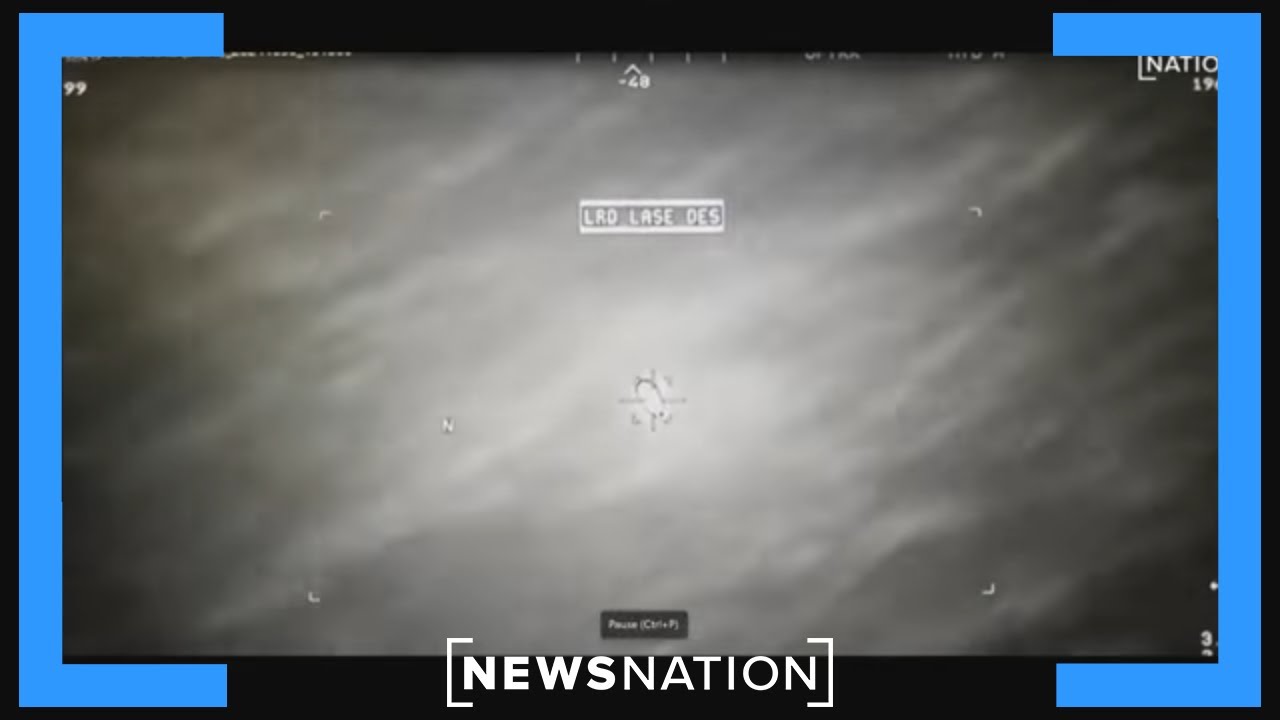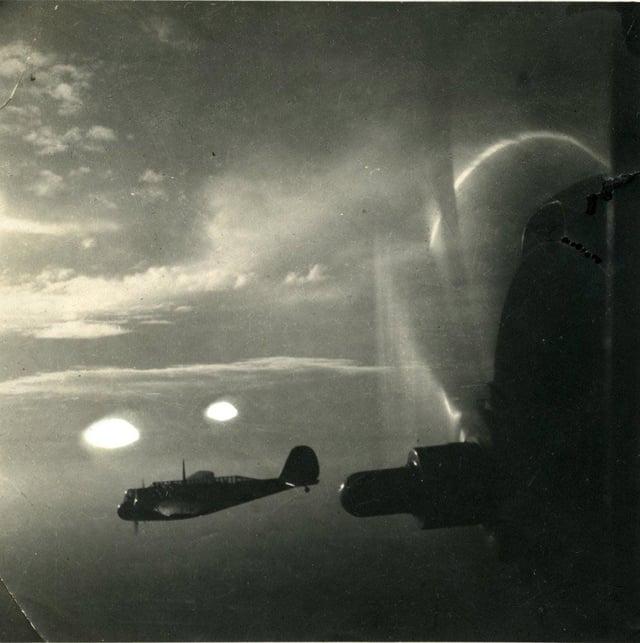
On April 21, 1991, a Britannia Airways Boeing 737-400 was on approach to London Heathrow Airport, descending through approximately 4,000 feet over the town of Lydd in Kent, when the flight crew observed an unidentified object pass close alongside and below the aircraft at high speed. The aircraft, operating as Britannia Airways flight BY-5061 on a scheduled service from Larnaca, Cyprus to London, was on a standard ILS approach in visual meteorological conditions with good visibility.
Both the captain and first officer observed the object from the flight deck. The captain, who had an unobstructed forward view, described the object as a wingless, cigar- or missile-shaped object approximately the size of a small aircraft or large missile — roughly estimated at 10 to 15 feet in length. The object had a metallic or highly polished sheen and appeared to be flying at high speed in a direction opposite to the Britannia aircraft's course — that is, traveling roughly east to west while the 737 was traveling roughly west to east on its approach course. The relative closing speed was therefore the sum of both objects' velocities, making the encounter extremely brief.
The object passed by the right side of the aircraft at such close range that the captain initially believed a collision had occurred and prepared for impact. He described it as passing within approximately 100 feet of the aircraft — a near miss by any definition in aviation safety terminology. The first officer confirmed the observation. Neither crew member reported hearing any sound from the object, though the sound environment in the cockpit during an approach would limit the detectability of external sounds from small objects at high relative speed.
No collision damage was found on the aircraft after landing, confirming the object had passed without contact. The crew filed an Air Miss report — the UK's official aviation near-miss reporting mechanism — with the UK Civil Aviation Authority (CAA) immediately after landing. This formal report triggered an investigation by the UK Airprox Board, the official body responsible for investigating near-miss incidents in British airspace. The filing of a formal Air Miss report, triggering official investigation protocols, is what distinguishes this case from many pilot UAP encounters and places it definitively in the category of formally documented aviation safety incidents.
The incident occurred during daylight in clear conditions, in controlled airspace actively managed by London Terminal Control, at an altitude within normal radar coverage. These conditions should have provided maximum opportunity for official corroboration of the crew's account through radar and other means — making the investigation's conclusions and limitations particularly significant in assessing what the encounter actually involved.
The UK Airprox Board, the government body responsible for investigating aviation near-miss incidents in British airspace, conducted a formal investigation of the report filed by the Britannia Airways crew. The Board reviewed the Air Traffic Control records, radar data from the London Terminal Control radar systems, and formal crew testimony. The investigation applied the standard Airprox methodology used for all near-miss investigations, which includes reconstruction of the relevant aircraft tracks, review of any corroborating contacts, and assessment of the causal factors and risk classification.
The Airprox Board's investigation produced a formal report classifying the incident and documenting its findings. The Board found no radar contact corresponding to the reported object in the London Terminal Control radar data for the relevant position and time. No other aircraft in the area were on a track or at an altitude consistent with the encounter, and no military exercise, known drone operation, or permitted test flight was identified that could account for the observed object. The Board was unable to identify the object or establish its origin.
The Civil Aviation Authority reviewed the Airprox Board's findings and the crew's formal statements. The CAA's assessment confirmed the crew's credibility and the genuine character of the near-miss report. Aviation authorities in the UK have a well-established protocol for assessing pilot credibility in Air Miss reports, and the Britannia crew's account was assessed as consistent with the report of experienced professional aviators who had observed what they believed was a genuine aviation hazard.
The Ministry of Defence's UAP desk, which at the time was reviewed by Nick Pope (who joined the desk in 1991), also received details of the Heathrow near-collision through the standard MoD UAP reporting channel. The MoD's review could not identify a conventional explanation for the reported object. No classified military program was identified as the likely source. The case was retained in MoD UAP files and was eventually made available to researchers through declassification under Freedom of Information Act requests in the 2000s.
One significant investigative finding concerned the object's appearance. The crew described it as wingless and cigar-shaped — characteristics inconsistent with any commercial aircraft, military aircraft, helicopter, known balloon, or conventional drone type that was either publicly known or later identified through declassification in 1991. The wingless cigar morphology places this case in a recurring category of UAP descriptions that appears across multiple independent military and civilian aviation cases across different countries and decades, suggesting either a consistent category of actual object or a consistent pattern of perceptual misidentification under the stress of close-encounter conditions.
The UK Airprox Board's official conclusion was that the object observed by the Britannia Airways crew could not be identified. The formal Air Miss report was classified at the lower end of the risk scale because no actual collision occurred, but the investigation did not produce a satisfactory conventional explanation for the observed object. The absence of a radar return, combined with the crew's credible account of a wingless metallic object at close range, left the case unresolved in the official aviation safety record.
The case's significance within aviation safety derives primarily from its formal documentation mechanism. Because the crew filed a formal Air Miss report, the encounter entered a regulated official investigative process with established protocols, crew credibility assessments, and a published outcome document. This makes the Heathrow 1991 case one of the most formally documented UAP near-miss events in civil aviation history — more systematically investigated than the vast majority of pilot UAP encounters, which typically go unreported due to professional stigma.
The Airprox Board's inability to identify any aircraft, drone, balloon, or natural object as the source of the crew's near-miss report — despite reviewing comprehensive radar data from one of the most heavily monitored airspaces in the world — is the central unexplained fact of the case. London Heathrow's approach corridor in 1991 was covered by multiple overlapping radar systems monitoring all traffic in the relevant volume. An object large enough to generate a near-miss with a Boeing 737 should reliably appear on at least one of these systems if it were a conventional physical object with standard reflective properties.
The absence of radar corroboration has been cited both by skeptics as evidence that the crew may have misidentified a small, transient atmospheric object, and by UAP researchers as a potential indicator of radar-evading characteristics — a property that, if demonstrated, would represent a significant technological capability of whatever produced the encounter. Neither interpretation has been definitively established by any publicly available analysis of the original radar data from the encounter.
- Q.01Why was no radar return detected for an object large enough to constitute a near miss with a Boeing 737? London Terminal Control's radar systems in 1991 were capable of detecting primary (non-transponder) returns from small aircraft and large birds under good conditions. An object of the size described by the crew — estimated at 10 to 15 feet — should be within the reflective size range for primary radar detection, particularly at close range to both the aircraft and the radar antenna. The absence of any return has not been satisfactorily explained in the published Airprox investigation.
- Q.02Could the object have been a military cruise missile or experimental unmanned vehicle in transit? The wingless, cigar-shaped description is consistent with a cruise missile or elongated unmanned aerial vehicle profile. In 1991, the UK military operated various cruise missile types, and the Gulf War had ended weeks earlier, potentially leaving classified vehicle types in transit. Whether a complete check of all military flight activity — including classified programs — in the relevant airspace was conducted as part of the Airprox investigation has not been confirmed in publicly available documentation.
- Q.03Was there any possibility of a coincidental meteorite or bolide at low altitude? Cigar-shaped objects observed at close range and high speed near aircraft have occasionally been attributed in other cases to bolides — meteors bright enough to be visible in daylight. Whether the atmospheric and astronomical conditions on April 21, 1991 were evaluated for any bolide activity in the southeast England area has not been addressed in publicly available accounts of the Airprox investigation.
- Q.04Were any ground observers in the Lydd area who could corroborate the crew's account? Lydd is a populated area in Kent. An object traveling at high speed and low altitude in daylight — particularly one that came close enough to a commercial aircraft to constitute a near miss — might have been observable by ground witnesses below the encounter point. Whether the Airprox Board or MoD surveyed ground observers in the area has not been established in public accounts of the investigation.
- Q.05Are the original Airprox Board records and full radar replay data still accessible and could they be analyzed with modern digital methods? Aviation safety records from 1991 may include original radar data that was analyzed with 1991-era tools. Whether a reanalysis of the original radar data using modern signal processing methods — potentially capable of detecting weaker returns in archival recordings — has been conducted or would be technically feasible is an open question relevant to several historical aviation UAP cases of this era.
- Q.06What does the Heathrow 1991 case reveal about the aviation safety implications of unidentified objects in controlled airspace? The formal Air Miss system produced the most thoroughly documented record of this encounter precisely because the crew had a formal, non-stigmatizing reporting channel that triggered official investigation. The contrast with the O'Hare 2006 case — where multiple trained observers had no equivalent mechanism and the FAA initially denied any report existed — illustrates how reporting infrastructure shapes the quality of the UAP evidence record. The Heathrow case is a central example in arguments for extending the UK Airprox-style formal near-miss reporting framework to UAP encounters across all aviation jurisdictions, potentially producing the systematic safety and scientific database that sporadic, stigmatized informal reporting cannot.