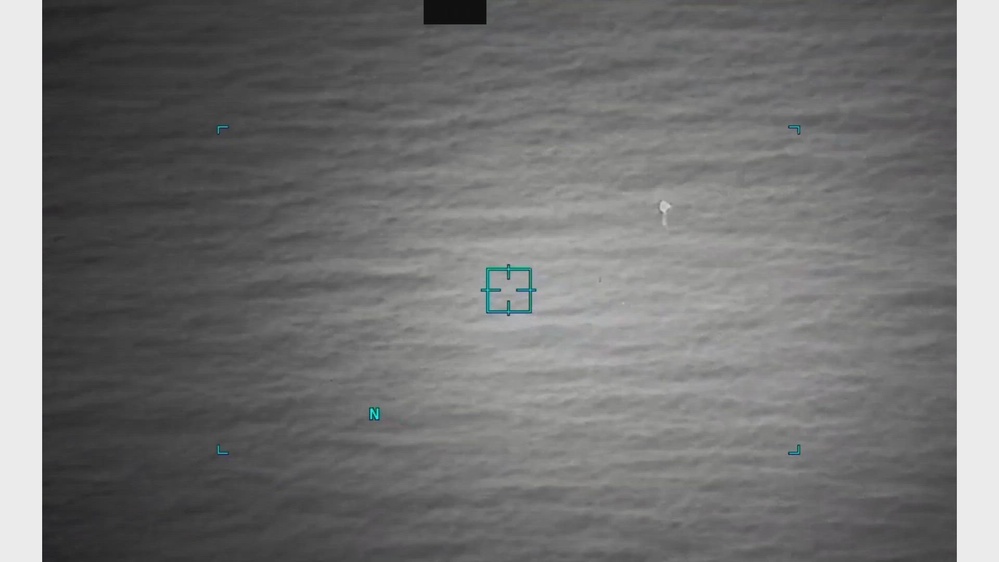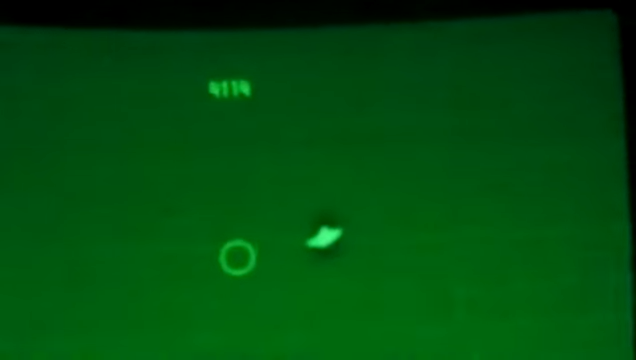
In 2008, a U.S. Marine gunner in an LAV-25 light armored vehicle recorded thermal night vision footage of an unidentified object rising from the desert floor in northern Iraq. The Marine was providing 360-degree security observation in a combat zone when he spotted the object at an estimated distance of 200 meters.
The footage shows the object ascending to about 25 meters before it began swaying laterally and continued climbing. The Marine noticed it while scanning the perimeter and, recognizing it was unlike any fixed-wing or rotary-wing aircraft he had ever seen, started recording the encounter with a personal camera pointed at the thermal display.
The Marine described the object as symmetrical with no visible rotors or tail section, and estimated it at roughly 25 feet across. Notably, its shape bears a striking resemblance to the 2015 "Gimbal" UAP captured by a Navy F/A-18 off the East Coast, with a similar rounded, disc-like profile and no visible means of propulsion.
The video was originally posted to YouTube on October 15, 2021, and received renewed public attention when investigative journalists Jeremy Corbell and George Knapp featured the footage on their WEAPONIZED podcast and in a TMZ special report following an exclusive interview with the Marine who captured the footage.
The footage was obtained and publicly released by investigative journalists Jeremy Corbell and George Knapp, who conducted an exclusive interview with the Marine who recorded the video. During the interview, the Marine provided a detailed account of the encounter, stating that there were no coalition aircraft operating in the area at the time and that the object was unlike anything he had seen during his deployment.
The Marine further reported that no sound was heard from the object, no rotor wash was observed on the desert floor, and the object's movement appeared controlled and intentional. He noted that the thermal night vision system of the LAV-25 provided clear imagery of the object despite the low-light conditions typical of nighttime desert operations.
The Marine also recounted a separate incident during a 2010 deployment to Helmand Province, Afghanistan, where he and his entire patrol observed an object hovering approximately 200 meters off the ground and 500 meters away, emitting multiple colors, with a left-to-right motion pattern that was similarly inconsistent with known aircraft behavior.
No official investigation by the Department of Defense, AARO, or any other government agency has been publicly acknowledged regarding this specific incident. The footage exists as a service member's personal recording of sensor display imagery, which may account for its absence from formal UAP reporting channels at the time.
No official conclusion has been issued by the Department of Defense, AARO, or any other government body regarding this incident. The footage was not captured through official military channels but as a personal recording of a sensor display, placing it outside the formal UAP reporting system that existed at the time.
The object's resemblance to the Gimbal UAP captured seven years later has generated interest among UFO researchers. The similar shape of two objects recorded in different theaters, one by a ground-based Marine in Iraq and another by a Navy F/A-18 over the Atlantic, has been noted by multiple analysts as potentially significant, though no formal comparative analysis has been conducted by government investigators.
The case remains unresolved, with the object's origin, capabilities, and intent entirely unknown. The footage contributes to a broader pattern of military personnel in conflict zones reporting and documenting unidentified aerial objects that exhibit flight characteristics incompatible with known conventional aircraft.
- Q.01What was the true nature of the object recorded by the Marine gunner in northern Iraq? The footage provides thermal imagery of an object with no visible conventional flight control surfaces, but the resolution and single-perspective nature of the recording limit definitive analysis of the object's physical characteristics, size, and composition.
- Q.02What is the significance of the morphological similarity between this 2008 object and the 2015 Gimbal UAP? The apparent resemblance between objects recorded in completely separate theaters and platforms raises questions about whether a common class of unidentified vehicles may be operating across diverse geographical regions and time periods.
- Q.03Did any U.S. military radar or other sensor systems in the northern Iraq theater detect the object during the encounter? The LAV-25's own sensor systems and any overlapping surveillance coverage in the combat zone may have recorded additional data about the object's track and performance characteristics that has never been accessed or analyzed.
- Q.04How many similar unreported encounters occur in active combat zones where personnel lack the means or authorization to officially document unusual aerial contacts? This case originated as a personal recording made with a civilian camera pointed at a military display, bypassing formal reporting channels. The number of analogous encounters that go entirely undocumented is unknown but potentially significant.
- Q.05What was the nature of the separate 2010 encounter reported by the same Marine in Helmand Province, Afghanistan? The Marine described an object observed by an entire patrol that emitted multiple colors and behaved unlike any known aircraft, suggesting that his encounters with unidentified objects were not isolated events but may reflect a broader pattern of UAP activity in theaters where U.S. military personnel were operating.