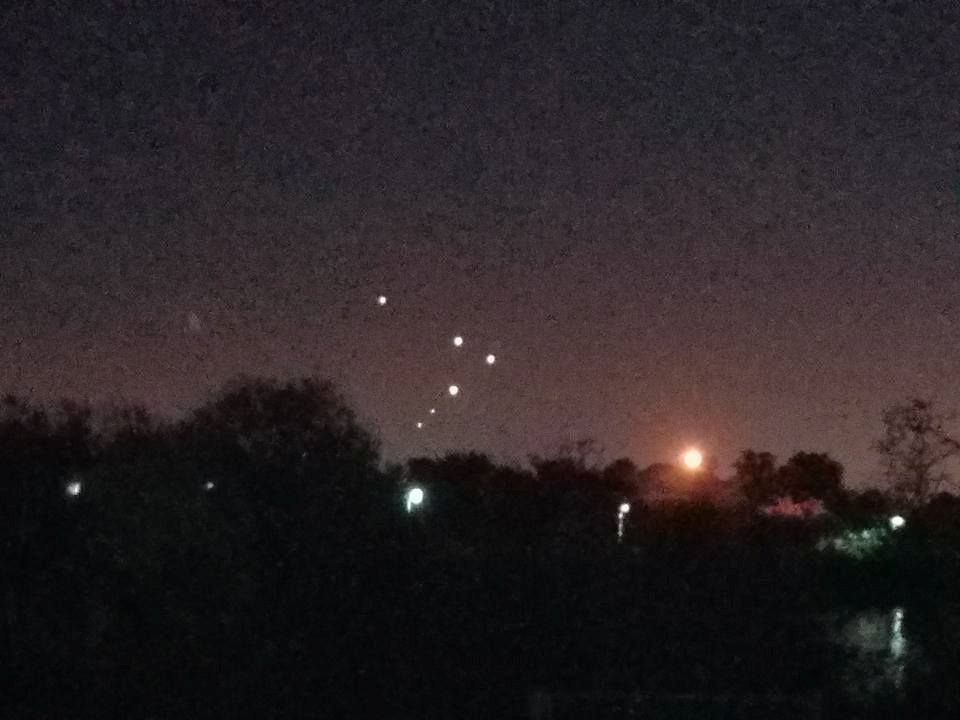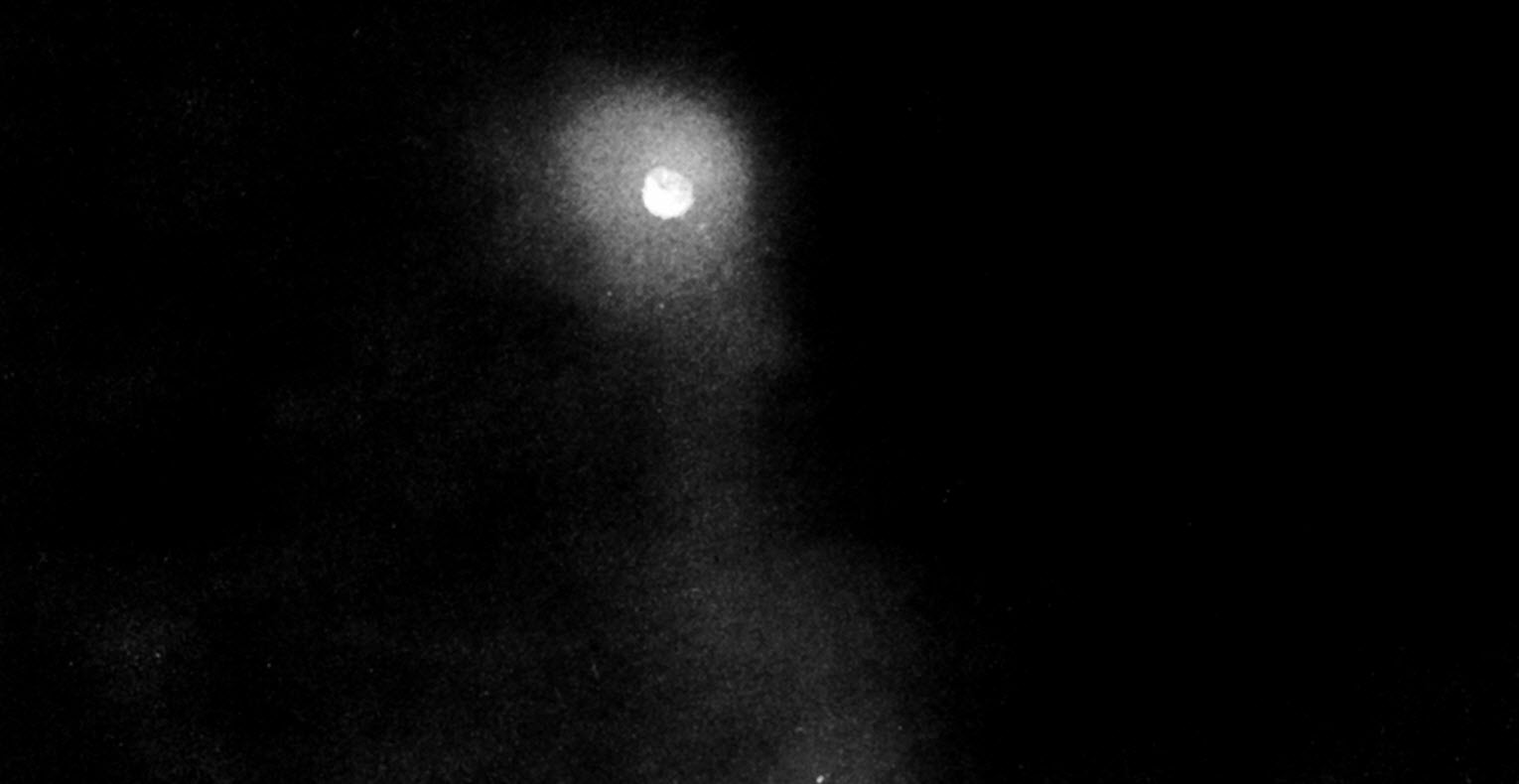
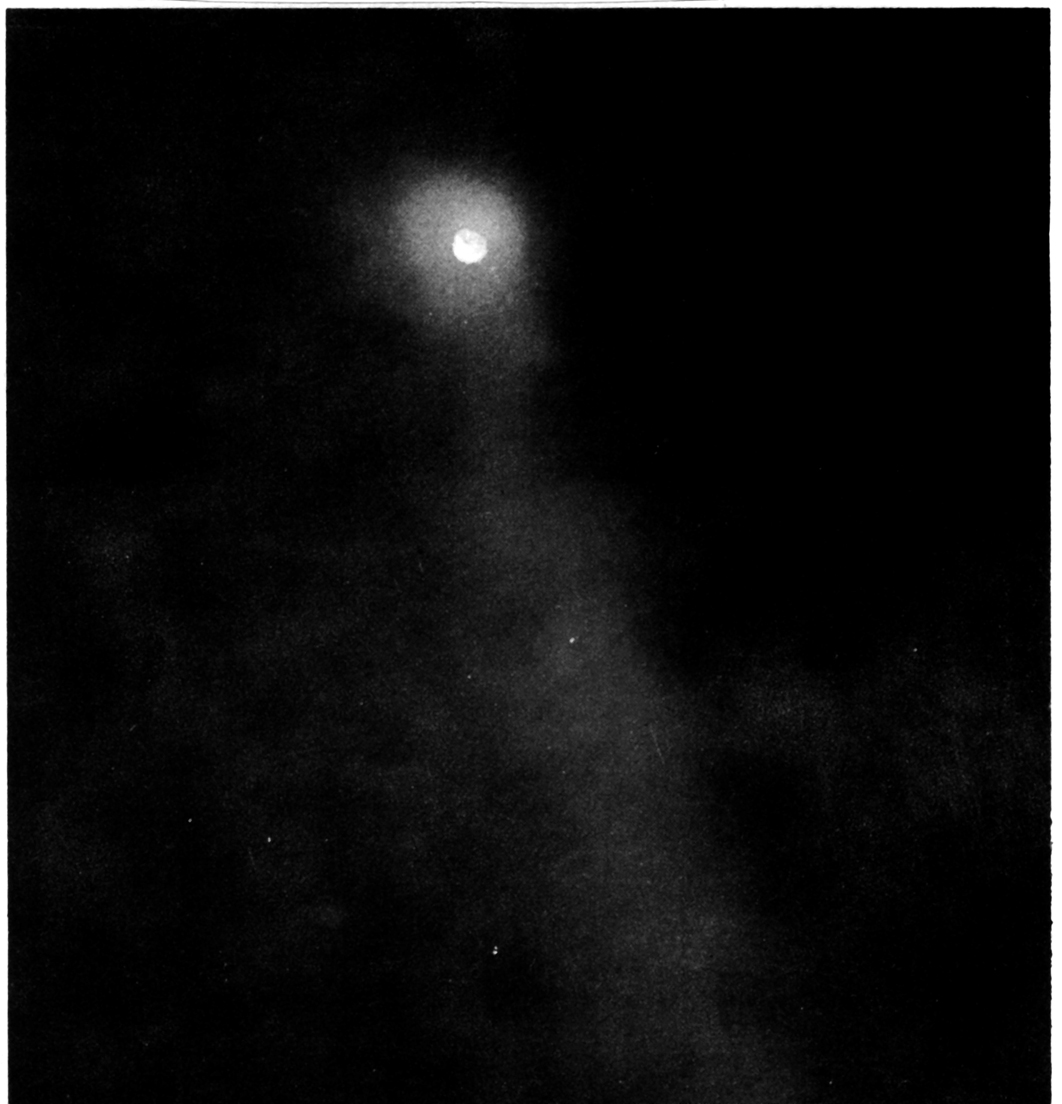
On the evening of August 19, 1949, during the annual Jitney Carnival in Norwood, Ohio — a suburb of Cincinnati — hundreds of festival attendees observed a strange luminous object in the night sky. The sighting was facilitated by Army Sergeant Donald R. Berger, a searchlight operator who was using a powerful military-grade searchlight as part of the carnival's attractions. When Berger directed the beam skyward, it appeared to illuminate a massive aerial object that reflected and interacted with the light in ways that defied conventional explanation.
The following morning, all three local Cincinnati newspapers — The Cincinnati Post, The Cincinnati Enquirer, and The Cincinnati Times Star — ran articles describing "strange lights" and a "comet seen over the city" from the previous evening. The widespread media coverage confirmed that the event was observed by a large number of independent witnesses across the greater Cincinnati area, making it one of the most publicly documented UFO incidents of the era.
Despite the initial newspaper reports, the sightings did not end with the August 19 carnival event. Over the next seven months, from August 1949 through March 10, 1950, a series of ten visual sightings of the same or similar objects were recorded in and around the Norwood area. Sergeant Berger meticulously documented these observations in personal logs, noting the times, durations, and behavior of the object as it appeared repeatedly in the searchlight beam.
According to Berger's logs, the initial August 19 observation began at approximately 8:15 p.m. and continued until 11:00 p.m. However, the sightings reported by Cincinnati residents continued well past midnight and persisted until 6:30 a.m. the following morning — a duration that made the official "searchlight beam bouncing off clouds" explanation increasingly difficult to sustain, as the carnival searchlights would not have been operating through the night.
The caliber of witnesses involved in the Norwood case was exceptional. The series of incidents were witnessed by civilians, clergy, scientists, police officers, and military officials — a cross-section of observers rarely assembled in a single UAP case. Among the most significant witnesses were Norwood Police Sergeant Leo Davidson, who photographed the object on October 23, 1949, and Reverend Gregory Miller, pastor of Ss. Peter & Paul Church in Norwood, who operated the searchlight alongside Berger during the initial carnival event.
Robert Linn, managing editor of the Cincinnati Post, and Rev. Miller were both convinced that Berger's searchlight had found and was bouncing off "some definite object" — not clouds or atmospheric phenomena. They entered into an agreement and personally reported the situation to intelligence officials at Wright Field (now Wright-Patterson Air Force Force) in nearby Dayton, Ohio — the same facility responsible for Project Grudge, the Air Force's UFO investigation program active at the time.
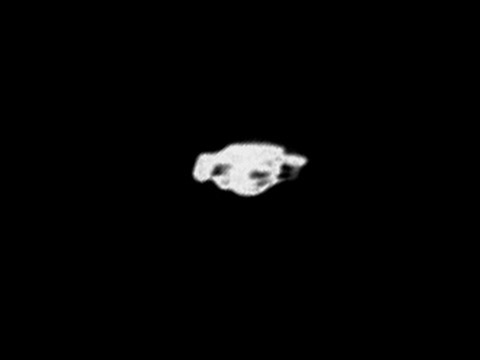
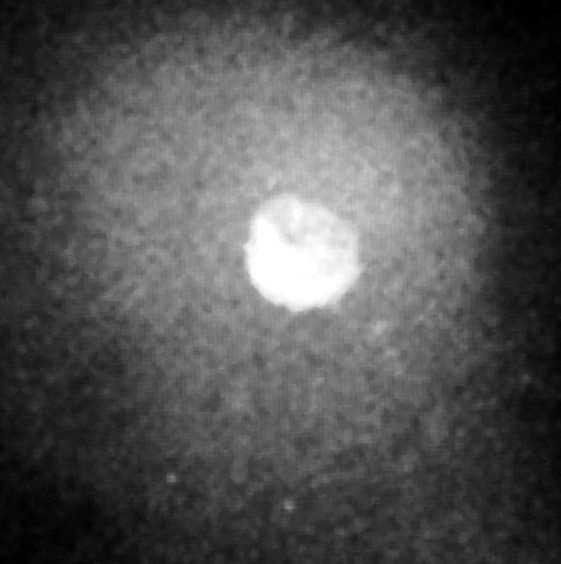
On October 23, 1949, Norwood Police Sgt. Leo Davidson photographed the object using a Speed Graphic camera with a 14-inch Wallensach telephoto lens. Several still photographs were taken, the best of which were reportedly submitted to Time-Life magazine and never returned to the witnesses. Additional photographic evidence was obtained by Rev. Miller, who exposed three 25-foot rolls of 16mm black and white motion picture film using a Hugo Meyer F-19-3 camera with telephoto lens. The film reportedly showed a large disc hovering in the searchlight beam and emitting "two distinct groups of triangular-shaped objects."
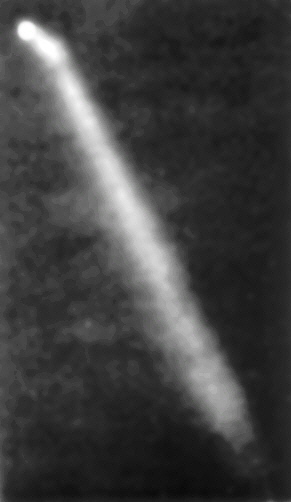
UFO investigator Leonard Stringfield obtained copies of the photographic evidence and still frames from the motion picture film, publishing them in his 1957 book "Inside Saucer Post 3-0 Blue." Dr. Richard Haines conducted an analysis of the Stringfield-published photograph. Researcher Ray Stanford obtained additional frames from the original 16mm film and produced enhanced versions showing what he described as a dramatic bending of the searchlight beam — approximately 26.5 degrees — as it approached the object. Stanford noted that the beam appeared to be "pulled" or "sucked" directly into the object when it entered a certain proximity, a phenomenon he described as "especially clear and easy to measure."
Sergeant Berger's logs, kept in Rev. Miller's possession until 1954 when they were transferred to Stringfield, contain a critical detail that undermines the official explanation: "When I moved the searchlight away, the object continued to glow." This observation suggests the object was self-luminous or independently reflective, not merely a cloud illuminated by the searchlight beam. The logs also indicate the possible presence of a second searchlight operating that evening, though whether Berger was aware of it remains unclear.
A weather bureau official independently corroborated the sighting, recounting his early-morning observation of two objects that looked like "two weather ceiling balloons" that were not moving despite wind speeds of 25 to 32 miles per hour — behavior inconsistent with any known atmospheric phenomenon or conventional aircraft.
The Norwood Searchlight Incident received no formal official conclusion from the U.S. Air Force or any government investigative body. Despite being reported directly to Wright Field by credible witnesses including a newspaper editor and a clergyman, the case does not appear in the publicly available Project Grudge files — an omission that UFO researchers have characterized as conspicuous given the case's exceptional witness quality and photographic evidence.
The explanation offered by local newspapers at the time — that the lights were searchlight beams from the Albee Theater in Cincinnati and Ss. Peter & Paul Church in Norwood "bouncing off clouds" — fails on multiple evidentiary grounds. The sightings continued until 6:30 a.m., well past the time carnival searchlights would have been operating. Berger's own logs confirm that the object continued to glow after the searchlight was moved away. And a weather bureau official reported stationary objects in windy conditions that could not be explained by cloud illumination.
The photographic and film evidence, though never subjected to modern forensic analysis, was assessed by multiple independent researchers including Dr. Richard Haines and Ray Stanford, both of whom found the images consistent with a structured aerial object rather than an atmospheric artifact. Stanford's analysis of the beam-bending phenomenon — where the searchlight beam appeared to curve approximately 26.5 degrees toward the object — remains one of the most intriguing physical anomalies documented in any UAP case.
The Norwood case stands as one of the most thoroughly witnessed and well-documented UAP incidents of the pre-1950 era, involving multiple police officers, clergy, scientists, military personnel, and hundreds of civilian observers, supported by both still photography and motion picture film. Its absence from official Air Force investigation records — despite being reported directly to Wright Field — raises significant questions about the scope and completeness of Project Grudge's case selection criteria.
- Q.01What happened to the three 25-foot rolls of 16mm motion picture film held by Rev. Gregory Miller? The film was last known to be at WCPO Channel 9 TV studios in Cincinnati in 1952. Its subsequent fate is unknown, and the loss of this primary evidence — which reportedly showed a disc emitting triangular-shaped objects — represents one of the most significant evidentiary losses in UAP history.
- Q.02Why does the Norwood case not appear in Project Grudge files? The case was reported directly to Wright Field intelligence officials by Robert Linn and Rev. Miller, yet no record of the investigation appears in the publicly available Grudge archive. Whether the case was investigated and the records destroyed, suppressed, or simply never filed remains unknown.
- Q.03What caused the apparent 26.5-degree bending of the searchlight beam documented in Ray Stanford's analysis of the film frames? Stanford's enhanced images show the beam curving toward the object as it approached, a phenomenon he described as the beam being "pulled" or "sucked" into the object. No conventional optical or atmospheric explanation has been offered for this effect.
- Q.04Were the best still photographs taken by Sgt. Leo Davidson ever returned after submission to Time-Life magazine? Multiple sources report that the photographs were sent to Time-Life and never returned. Whether Time-Life still possesses these images in its archives has not been publicly confirmed.
- Q.05Was there a second searchlight operating on the night of August 19, 1949? Berger's logs suggest the possible presence of another searchlight, but whether it was the Albee Theater's unit, the church's unit, or an unaccounted-for source has never been definitively established. If only one searchlight was operating, the official "two beams bouncing off clouds" explanation collapses entirely.
- Q.06What did the weather bureau official actually observe at 6:30 a.m.? His description of two stationary objects resembling "weather ceiling balloons" that did not move in 25-32 mph winds is physically inconsistent with any known balloon behavior. Whether this observation was formally recorded and whether additional meteorological data exists for that morning remain open questions.