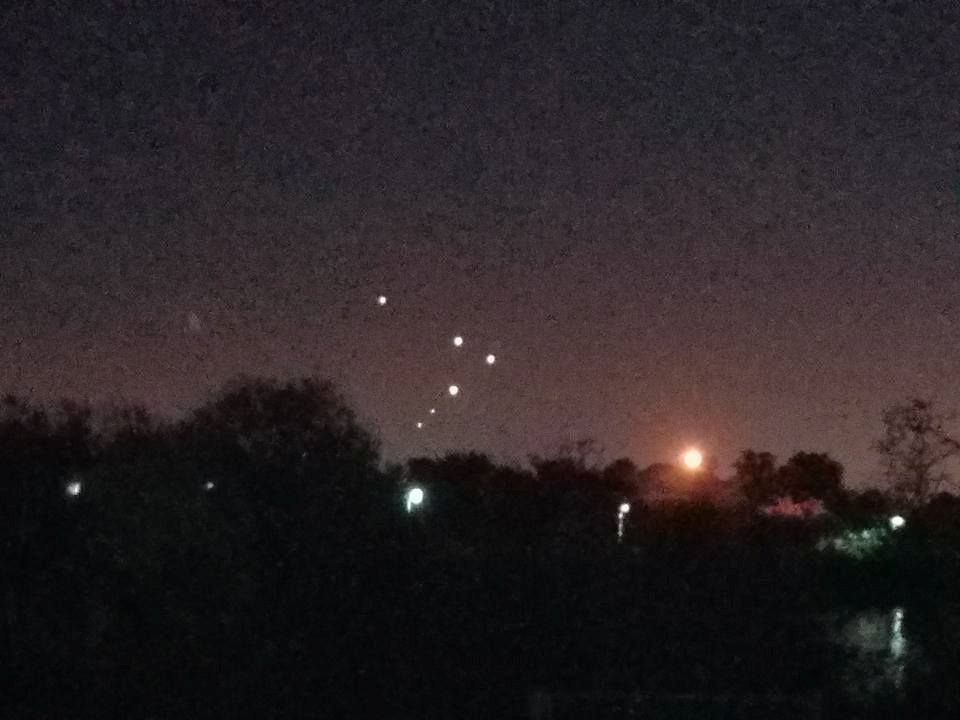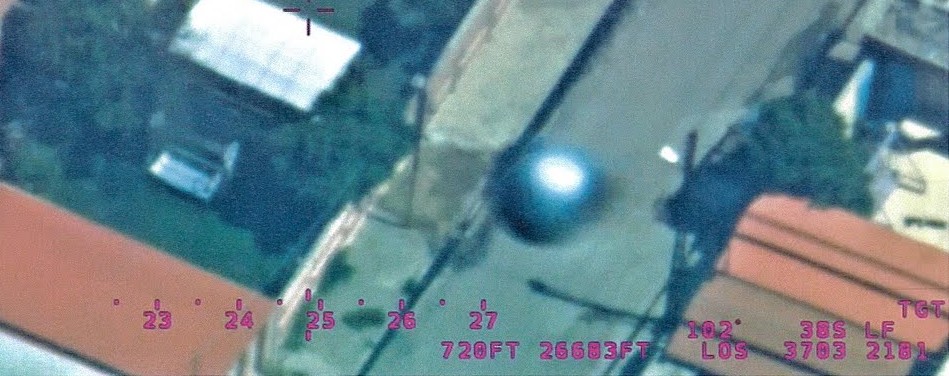
In the early morning hours of December 26, 1980, U.S. Air Force security personnel stationed at RAF Woodbridge in Suffolk, England, observed unusual lights in the adjacent Rendlesham Forest. RAF Woodbridge and the neighboring RAF Bentwaters formed a dual-base complex operated by the U.S. Air Force's 81st Tactical Fighter Wing — one of the most strategically significant American installations in Cold War Europe, reportedly hosting nuclear weapons at the time of the incident.
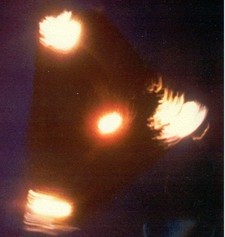
Security patrol members Staff Sergeant James Penniston and Airman John Burroughs left the base perimeter to investigate the lights and reported encountering a structured craft resting on the forest floor in a clearing. Penniston described the object as a triangular craft approximately nine feet across and six feet high, covered with raised hieroglyphic-like markings, and warm to the touch. He stated he spent approximately 45 minutes in proximity to the object before it rose silently and maneuvered through the trees before departing. Burroughs corroborated the close encounter from a shorter distance and reported unusual physiological effects during the incident that persisted afterward.
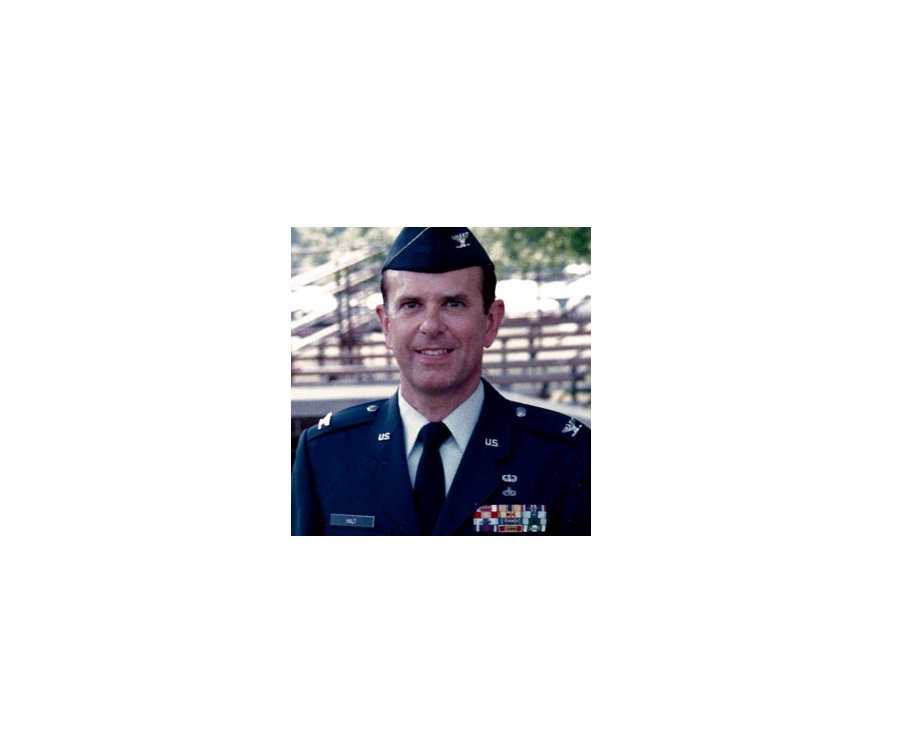
A second significant event occurred on the night of December 27–28, 1980. Lieutenant Colonel Charles Halt, Deputy Base Commander of RAF Bentwaters, led a larger group of military personnel into the forest to investigate continued light observations. Halt recorded audio of the investigation on a handheld cassette recorder as events unfolded, producing a rare real-time military document of an active UAP encounter. The recording — known as the "Halt tape" — captures Halt and his team describing lights maneuvering in the forest, objects moving at high speed above the treeline, and beams of light directed toward the ground from aerial objects.
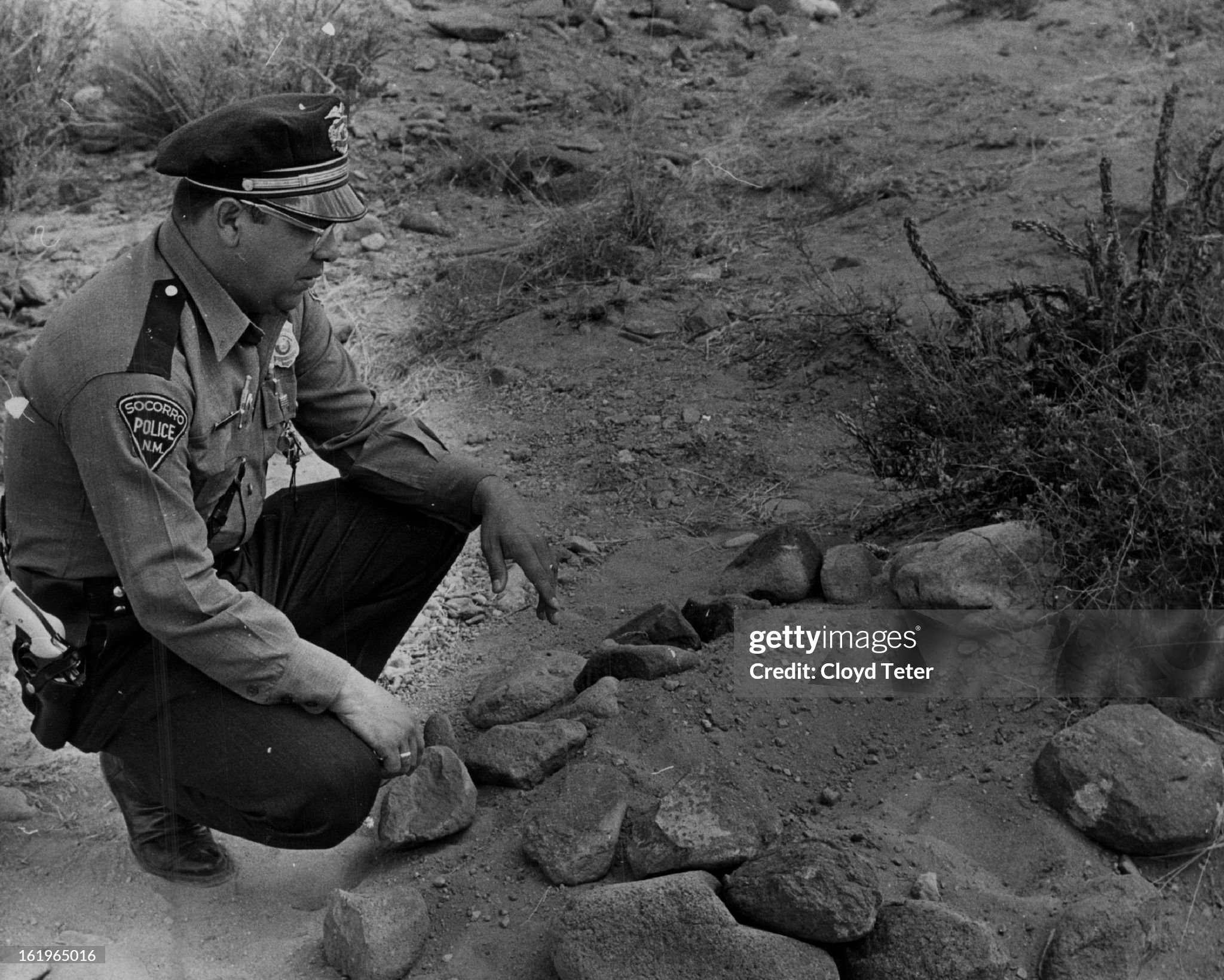
Physical evidence was documented and measured at the site of the first encounter. Three depressions in the ground arranged in a triangular pattern — consistent with landing gear impressions from a craft of the described dimensions — were photographed and measured. Radiation readings taken by a Geiger counter at the site registered approximately ten times the expected background levels, with the highest readings concentrated at the central ground depression. Broken branches and scorched or flattened vegetation were also noted and documented.
Lieutenant Colonel Halt subsequently authored a formal memorandum addressed to the British Ministry of Defence, dated January 13, 1981, describing the incidents in the measured language of official military communication. This memo — declassified in 1983 via the U.S. Freedom of Information Act — remains one of the very few official military documents authored by a senior officer confirming that serving U.S. Air Force personnel witnessed and investigated UAP activity at close range, finding physical evidence at the scene.
The British Ministry of Defence (MoD) received Halt's memorandum and conducted a limited internal review through its Defence Intelligence Staff (DIS). The MoD's investigation concluded that the events, while acknowledged as having occurred, posed no threat to national security and required no further action — the standard determination applied to UAP reports under the MoD's long-standing policy of treating such incidents primarily as security screening matters rather than scientific questions.
The MoD investigation did not include on-site forensic examination of the landing area, independent measurement or analysis of the radiation readings, or formal comprehensive debriefing of all witnesses. The Halt Memo was accepted as authentic, but the MoD's handling of the radiation data — which some later researchers argue indicated significant anomalous readings at the landing site — was limited in scope and the detailed analysis was never publicly released.
The U.S. Air Force conducted no formal investigation of its own at the time. The events were treated by Air Force command as a local matter addressed through the base reporting chain. No Air Force investigation report from 1980 or 1981 has been publicly identified or declassified, though base security logs and operational records for the period — partially released through subsequent FOIA requests — confirm the events were entered into official records.
A particularly significant and unexplained outcome of the case involves airman John Burroughs's medical records. Burroughs spent years attempting to obtain his Department of Veterans Affairs medical records in connection with health conditions he attributed to his close encounter in the forest. He discovered that his VA medical records from the period following Rendlesham had been classified — an entirely unprecedented circumstance for a routine medical file, and one that strongly implies government knowledge of something unusual associated with his December 1980 experience. Burroughs eventually obtained partial records only after sustained political advocacy.
Nick Pope, who served on the MoD's UAP desk from 1991 to 1994 and reviewed the Rendlesham file in that capacity, has characterized the case as the most thoroughly evidenced and credible military UAP incident in British history. Pope specifically cited the combination of multiple credible witnesses, documented physical evidence, radiation measurements, the real-time Halt tape recording, and the formal Halt Memo as constituting an unusually robust convergence of evidence streams rarely seen in a single case.
The British Ministry of Defence's official conclusion is that the Rendlesham events occurred as described but posed no threat to national security and have no satisfactory conventional explanation. The MoD has not retracted this conclusion, nor has it offered an alternative explanation that accounts for the radiation readings, the landing impressions, Penniston's close-contact description, or Lt. Col. Halt's direct observation of aerial lights and ground-directed beams on the second night.
The Halt Memo is the critical document that distinguishes Rendlesham from most UAP cases in the historical record. It is a formal military communication authored by a senior U.S. Air Force officer and addressed to a foreign nation's defence ministry, describing in official bureaucratic language the direct observation of unexplained objects by multiple serving military witnesses over multiple nights. Its existence makes the case's official dismissal — which has at times referenced the nearby Orfordness lighthouse as the probable cause — difficult to reconcile with the detailed, specific content of the document itself.
The classification of Burroughs's medical records, the absence of any U.S. Air Force investigation documentation from 1980–1981, and the undisclosed fate of original physical evidence collected at the landing site constitute gaps in the official record that have never been satisfactorily explained. These gaps are consistent with either deliberate concealment or extraordinary administrative oversight — and advocates argue the former is significantly more plausible given the sensitivity of the base and the nature of the events.
Rendlesham stands alongside the USS Nimitz encounter as one of the two most comprehensively evidenced military UAP cases in the Western record. Its particular significance lies in the combination of physical trace evidence, elevated radiation measurements, a real-time audio record, an official military memorandum, classified medical records, and multiple credible serving military witnesses — a convergence of evidence types that no other UAP case in the British or American record fully matches.
- Q.01What was the source and full significance of the elevated radiation readings at the landing site? Halt documented radiation readings approximately ten times background levels at the depression site, with the highest concentration at the central impression. Whether these readings were independently verified, what instrument was used and at what sensitivity setting, and whether the readings are consistent with any known terrestrial radiation source at that forest location has never been formally analyzed in a publicly available scientific study.
- Q.02Why were John Burroughs's military medical records classified? Burroughs spent years attempting to access his own VA records only to find them classified — a circumstance with no known precedent for routine military medical files. What medical information from the period following Rendlesham required classification, and under whose authority that classification was applied, has never been officially explained. The eventual partial release came only through years of sustained political pressure.
- Q.03Were RAF Bentwaters or regional radar systems tracking anomalous contacts on the nights of the encounters? The base had organic radar capabilities, and RAF Watton operated a regional air defense radar in Suffolk. Whether radar returns corresponding to the forest objects were detected on either night — and whether those records were reviewed by either the MoD or U.S. Air Force during their inquiries — has been addressed inconsistently across available official and unofficial accounts.
- Q.04What were the hieroglyphic-like markings Penniston described on the craft's surface? Penniston documented the symbols he described touching on the object in drawings provided to investigators and in subsequent interviews. Whether these symbols correspond to any known language, marking convention, or technical identification system has not been the subject of any formal investigation or published expert linguistic or symbolic analysis.
- Q.05What was collected as physical evidence at the landing site, and where did it go? Halt's investigation team documented and apparently collected samples and measurements from the landing site. What physical evidence was collected, what laboratory analysis if any was performed, and what became of these samples has not been established in publicly available records from either the MoD or U.S. Air Force.
- Q.06How does Rendlesham fit into the global pattern of UAP encounters near nuclear-capable military installations? RAF Bentwaters reportedly hosted American nuclear weapons in 1980, placing it in a category with Malmstrom Air Force Base (1967), Soviet ICBM sites documented in the 1980s, and numerous other facilities where UAP activity has been credibly reported in proximity to nuclear infrastructure. Researchers including Robert Hastings have documented this pattern across decades and multiple nations. Rendlesham is a central case in this discussion — and the failure of any government to investigate these cases as a coherent pattern rather than isolated incidents remains one of the most consequential gaps in the official UAP research record.