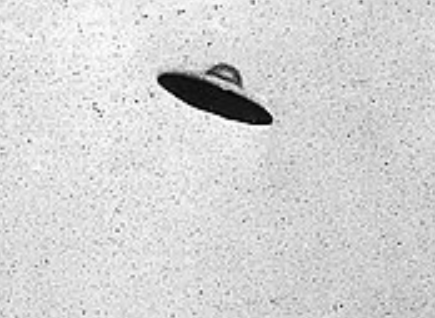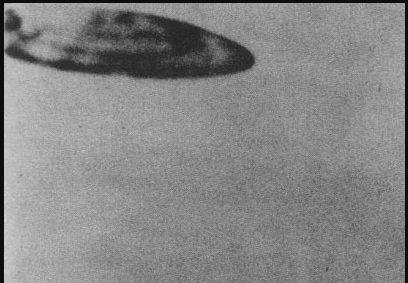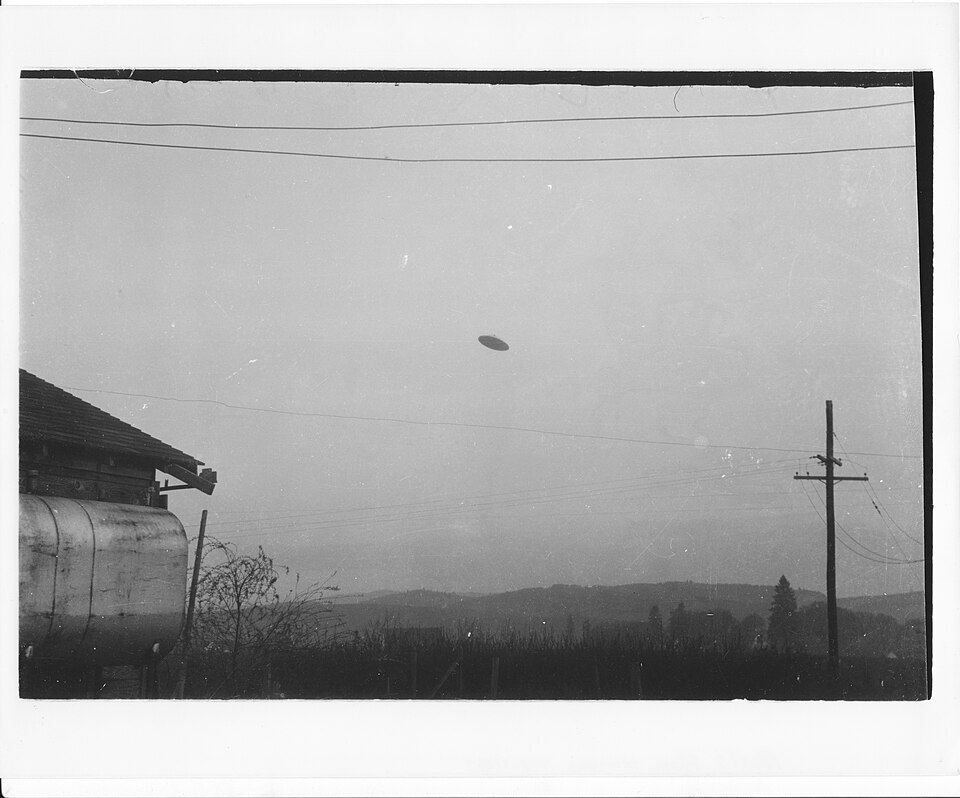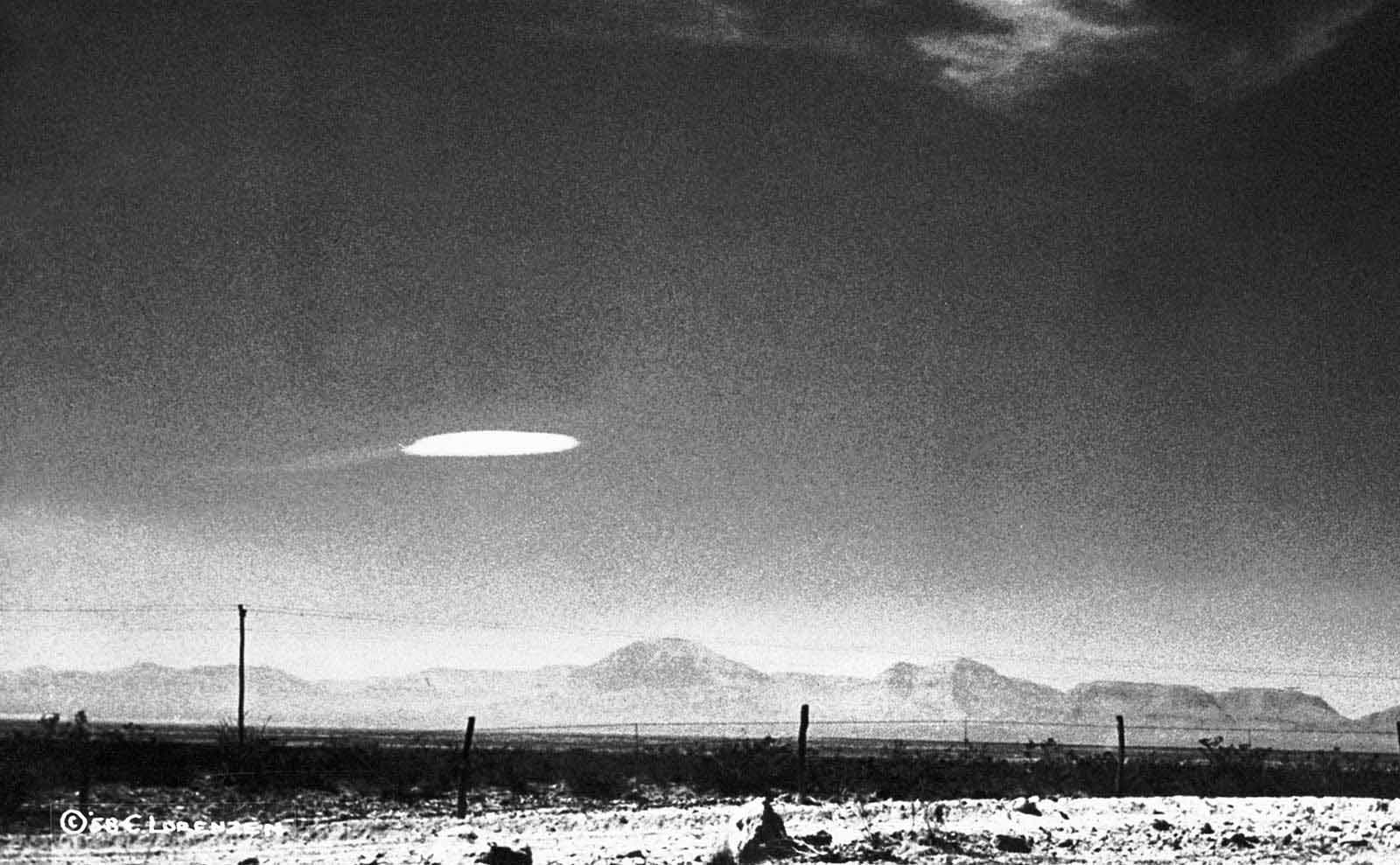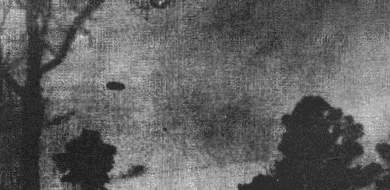
In 1952, a disc shaped object was photographed in the sky near Hampton, Virginia. The photograph shows a darkened silhouetted form of a disc or saucer shaped object against a lighter sky background, with the object appearing in clear profile with a defined edge and a flat or slightly domed upper surface visible in the silhouette. The photograph was submitted to the U.S. Air Force and examined by Project Blue Book as part of the program's substantial caseload from the peak year of American UAP activity in the early Cold War era.
Hampton, Virginia in 1952 was the location of Langley Air Force Base and the National Advisory Committee for Aeronautics research facility that would later become NASA Langley Research Center. The proximity to one of the most important aerospace research installations in the United States gives the Hampton location particular relevance in assessing both the possibility of a misidentified experimental aircraft and the possibility that trained aerospace personnel at or near the facility might have had relevant observational context for any unusual aerial activity in the area during that period.
The 1952 context is critical for situating the Hampton photograph. The summer and fall of 1952 were the most active period of UAP reporting in American history to that point, with the July Washington D.C. radar incidents having generated enormous national attention and public awareness of unusual aerial phenomena. Reports from across the country were being submitted to the Air Force at an unprecedented rate, and the Hampton photograph was one of many received during this concentrated period. Whether the Hampton photograph was taken during the peak summer months or at another point during 1952 has not been precisely documented in publicly available accounts of the case.
The photograph's silhouetted character, showing the object as a dark form rather than a reflective or luminous one, distinguishes it from many other 1952 era UAP photographs that show the objects as bright reflective discs. The silhouette appearance could indicate that the photograph was taken with the object positioned between the camera and a brighter sky or light source, placing the object between the photographer and the sun or an overcast bright sky. This lighting condition is consistent with a photograph taken looking upward or at a high elevation angle with the object above the photographer rather than at a lower angle against a darker portion of the sky.
The Hampton photograph entered the civilian UAP research literature through Patrick Gross's extensive online archive of Blue Book case photographs, which has preserved access to many images from the program's files that would otherwise be largely inaccessible to independent researchers. Its survival in this archive ensures that the image remains available for analysis despite the passage of more than seventy years since it was taken.
Project Blue Book reviewed the Hampton photograph as part of its routine photographic case processing. The program's resources in 1952 were severely strained by the volume of reports received during the year's exceptional activity, and many photograph submissions received less thorough investigation than the most significant cases. The Hampton photograph does not appear to have received priority treatment comparable to the Lubbock, McMinnville, or Washington radar cases, and the investigation record for the case is correspondingly sparse in publicly available accounts.
The standard photographic analysis applied to cases of this type examined whether the image showed evidence of darkroom manipulation, whether the object's silhouette was consistent with any known aircraft type viewed from below, and whether the photograph's technical characteristics were internally consistent with a genuine outdoor scene rather than a double exposure or studio production. The photograph's silhouetted character made some analytical approaches more difficult because the object's surface detail is not visible, limiting the range of conventional identifications that could be tested against the image content.
The proximity of Langley Air Force Base and the NACA facility to the Hampton location introduces the possibility that the photographed object was an experimental aircraft from one of those installations, or that personnel at those facilities might have independently observed or tracked the same object. Blue Book investigators routinely queried nearby military installations about classified programs when unusual aerial objects were reported in their vicinity, though whether such a query was made in the Hampton case and what response was received has not been established in publicly available accounts of the investigation.
The object's apparent shape in the silhouette has been interpreted by different analysts as consistent with various conventional objects including large birds seen from below at an angle, conventional aircraft in unusual lighting, or vehicles with disc shaped silhouettes. The silhouette format limits the discriminating power of shape analysis compared to photographs that show surface texture, reflectivity, and structural detail, making conventional identification both easier to propose and harder to definitively confirm or rule out.
Blue Book's disposition of the Hampton case has not been prominently featured in public accounts of the program's history, suggesting it was treated as a routine submission rather than a priority case. Its survival in the research literature is attributable more to the comprehensive archival work of independent researchers who systematically documented Blue Book's photograph files than to any particular prominence it achieved in the official investigation record.
The Hampton Virginia photograph's official disposition in Project Blue Book's records has not been prominently documented in publicly available research literature, suggesting either an inconclusive or conventional designation reached without significant analytical controversy. The absence of a notable official conclusion distinguishes this case from the higher profile photograph cases of the same era and reflects its status as one of many photographic submissions processed by a program under severe resource pressure during 1952.
The photograph nonetheless represents a documented piece of visual evidence from the most active year of American UAP reporting in the early Cold War era, taken in a location adjacent to one of the country's most important aerospace research facilities during a period of demonstrated anomalous aerial activity across the eastern United States. These contextual factors give it analytical interest beyond its individual evidential weight.
The silhouetted disc shape visible in the photograph is one of the most commonly reported visual forms in UAP sightings across all eras. Whether the Hampton photograph documents the same category of phenomenon observed by the Texas Tech professors in Lubbock, photographed by Carl Hart Jr., filmed by Nick Mariana in Great Falls, and tracked by radar operators in Washington during the same general period of 1951 to 1952 is a question that the individual photograph cannot answer but that systematic comparative analysis of the complete 1952 evidence archive might address.
The Hampton case exemplifies the large category of mid tier Blue Book photograph cases that received sufficient investigation to be preserved in the archive but not enough to achieve definitive resolution. This category, which constitutes the majority of the program's unresolved photograph submissions, represents a largely unanalyzed archive of historical UAP evidence whose collective significance for understanding the 1952 wave and the broader early Cold War UAP pattern has never been comprehensively assessed using modern methods.
- Q.01Who took the Hampton photograph, and what were the precise circumstances of the observation? The witness identity, professional background, location within Hampton, time of day, and observational circumstances are the basic contextual data necessary to assess any photograph's evidential significance. Whether this information was recorded by Blue Book investigators and is available in the program's archived case files at the National Archives has not been established in publicly available accounts of the case.
- Q.02What was the precise date of the Hampton photograph within 1952, and does it fall within the peak summer activity period? The date of the sighting relative to the July Washington D.C. radar incidents, the broader 1952 wave, and other contemporaneous regional sightings could establish whether the Hampton photograph is part of the concentrated summer wave or an independent event from a different part of the year. Whether this information is recorded in the Blue Book case file has not been publicly established.
- Q.03Were any personnel from Langley Air Force Base or the NACA facility who observed unusual aerial activity in 1952 interviewed in connection with the Hampton photograph? The concentration of aviation expertise and observation infrastructure at the Langley complex makes its personnel among the most qualified potential corroborating witnesses for any unusual aerial activity in the Hampton area. Whether Blue Book investigators queried Langley personnel in connection with this specific photograph or any other 1952 Hampton area reports has not been established.
- Q.04What does the photographic geometry of the silhouette reveal about the object's apparent size and elevation? A silhouetted object photographed against a defined sky background can in principle be measured for its angular subtended size, and if any reference objects with known angular size are visible in the same frame, a range of possible object sizes and distances can be derived. Whether such geometric analysis has been applied to the Hampton photograph with published results has not been established.
- Q.05Does the original negative or a high generation print survive in any accessible archive? The photograph as archived by Patrick Gross and available in online research resources is of limited resolution. Whether a higher quality version exists in the National Archives Blue Book collection, in the Air Force's records, or in any other accessible repository has not been publicly established, and a higher resolution source could substantially improve the analytical basis for any assessment of the photograph's content.
- Q.06What would a comprehensive survey of all 1952 Hampton and Tidewater Virginia UAP reports reveal about whether the photograph documents an isolated event or part of a regional pattern? The Hampton Roads area in 1952 was home to multiple major military installations including Langley Air Force Base, Naval Station Norfolk, and various naval aviation facilities. Whether UAP reports from this military aviation intensive region in 1952 formed a coherent regional pattern distinct from the national background rate, and whether the Hampton photograph fits that pattern, is a question that the individual case cannot address but that a systematic regional analysis of Blue Book's complete 1952 Virginia caseload could potentially illuminate.