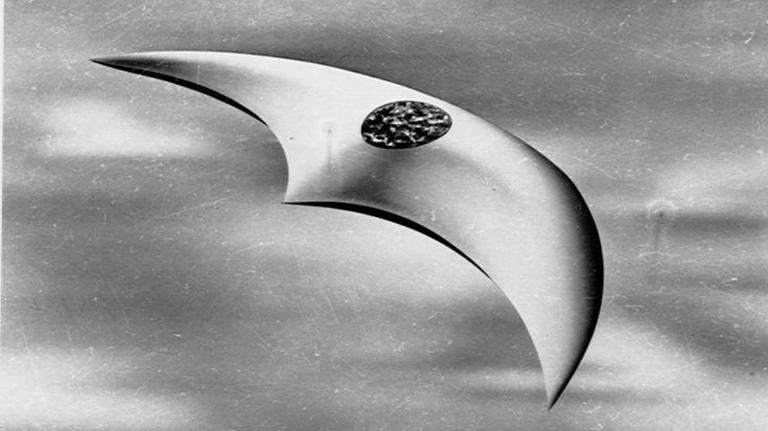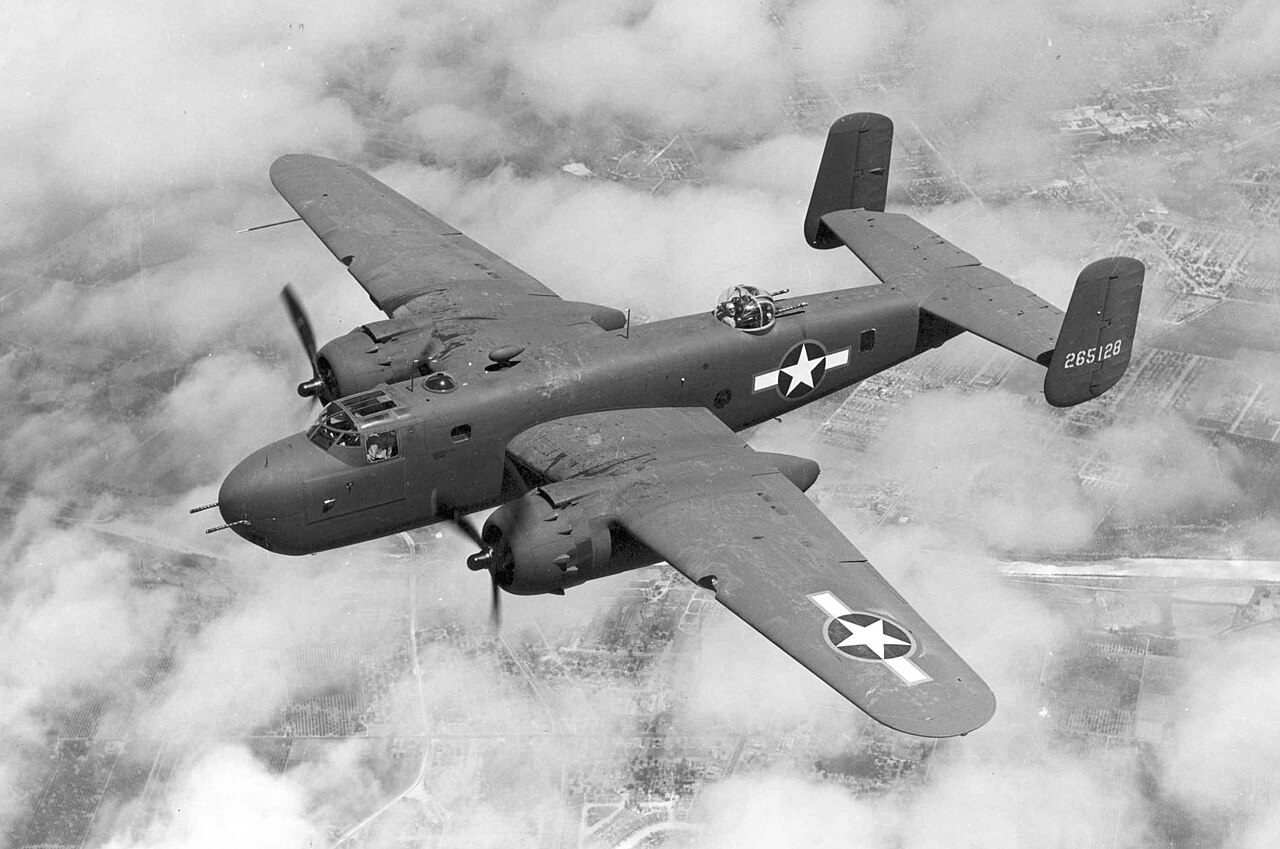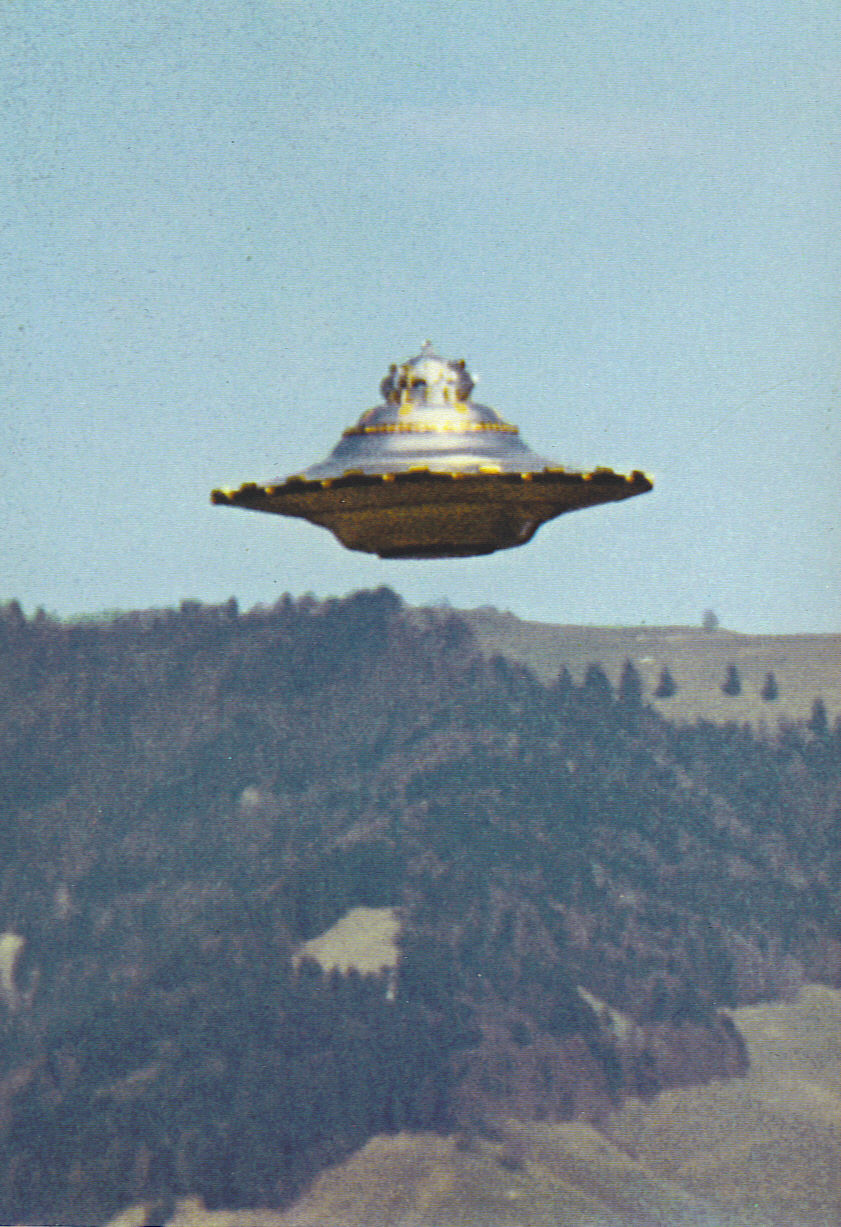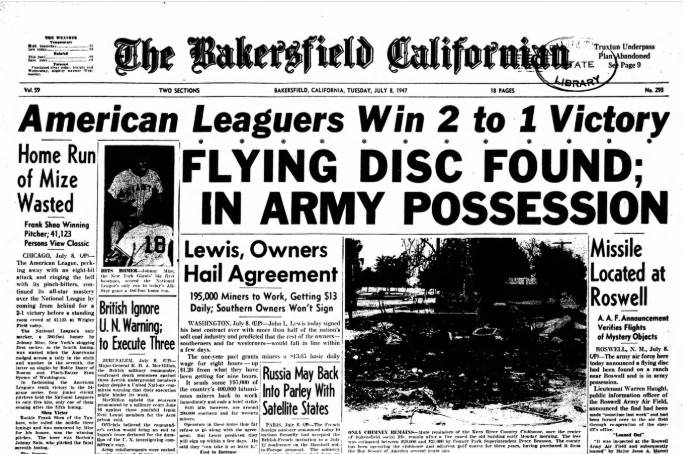
In early July 1947, ranch foreman W.W. "Mac" Brazel discovered a large field of unusual debris scattered across the Foster Ranch, located approximately 75 miles north of Roswell, New Mexico. The debris field, reportedly stretching over a quarter mile in length, contained materials Brazel described as unlike anything he had previously encountered — lightweight metallic foil, sticks, and material with unusual physical properties including apparent resistance to deformation.
Brazel reported his discovery to Chaves County Sheriff George Wilcox, who in turn notified Roswell Army Air Field (RAAF). Major Jesse Marcel, the RAAF's intelligence officer, along with Counter Intelligence Corps officer Sheridan Cavitt, were dispatched to the Foster Ranch to investigate. Marcel later described the recovered material as extraordinary, noting physical properties he could not attribute to any known aircraft component or conventional weather device, including metallic foil that returned to its original shape after being crumpled.
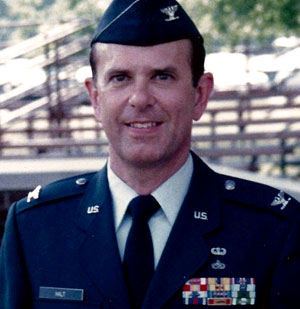
On July 8, 1947, the RAAF issued a press release through Public Information Officer Walter Haut announcing that the Army Air Forces had recovered a "flying disc" from a ranch near Roswell. This statement made international headlines and remains the only time in history the U.S. military has officially announced the recovery of a flying disc. The Roswell Daily Record ran the story under the headline: "RAAF Captures Flying Saucer on Ranch in Roswell Region."
Within hours, the announcement was publicly retracted. Brigadier General Roger Ramey, commanding officer of the Eighth Air Force at Fort Worth Army Air Field, held a press conference displaying what he identified as the actual recovered material — remnants of a common weather balloon and its attached radar reflector. Photographs taken at the press conference show Major Marcel posing with foil and stick debris identified as weather balloon components. Marcel later maintained he had been photographed with substitute material and that the real debris was far more unusual.
Over the following decades, numerous witnesses associated with the recovery — military personnel, civilian contractors, and local residents — provided accounts describing material and events fundamentally inconsistent with the official weather balloon explanation. These accounts included descriptions of memory-resistant metallic foil, lightweight beams with unusual hieroglyphic-like markings, and, in some accounts, recovered non-human biological remains at a second crash site distinct from the Brazel debris field. The divergence between these accounts and the official record became the defining contested question of the most famous UAP case in history.
The Roswell incident has been the subject of multiple official U.S. government investigations spanning five decades. The initial Army Air Forces investigation in 1947 produced the weather balloon conclusion presented by General Ramey. No further official investigation was conducted for more than forty years, during which time the case receded from public discourse before re-emerging with force in the 1970s and 1980s through civilian researchers including Stanton Friedman and Charles Berlitz.
In 1994, following sustained congressional pressure led by New Mexico Congressman Steven Schiff, the U.S. Air Force conducted a comprehensive records review. The resulting report — "The Roswell Report: Fact Versus Fiction in the New Mexico Desert" — concluded that the recovered material was most likely debris from Project Mogul, a classified program using high-altitude balloon arrays carrying acoustic sensors designed to monitor Soviet nuclear tests. The Mogul explanation accounted for why the material appeared unusual to observers unfamiliar with classified programs and why the military initially sought to suppress details of the recovery.
A second Air Force report published in 1997, "The Roswell Report: Case Closed," addressed persistent witness accounts of recovered bodies or non-human remains. The report concluded that these accounts likely arose from confusion with crash test dummy drops conducted under the 1950s High Dive and Excelsior programs, in which human-like mannequins were dropped from high-altitude balloons over the New Mexico desert to test parachute systems. Critics immediately noted that these programs did not begin until 1953 — six years after the 1947 incident — making them an implausible source for contemporaneous 1947 witness accounts.
Both Air Force reports were prepared by Captain James McAndrew of the Air Force Office of History. His research confirmed that Project Mogul balloon train Flight No. 4, launched from Alamogordo Army Air Field on June 4, 1947, was tracked toward an area consistent with the Foster Ranch debris field before its signal was lost. However, the flight's final position was estimated rather than confirmed, and the geographic overlap between the estimated impact zone and the debris field is approximate rather than precise.
The FBI also conducted a brief inquiry in 1947 following the initial "flying disc" announcement. A declassified FBI teletype from the period confirms that the Army told the agency the recovered object was a "flying disc" that had been shipped to "higher headquarters" — a characterization inconsistent with the subsequent weather balloon explanation. This document has been interpreted differently by advocates of each competing theory, with some seeing it as evidence of genuine recovery of an extraordinary object and others as routine bureaucratic communication during a period of institutional confusion.
The U.S. Air Force's official conclusion, issued through the 1994 and 1997 reports, is that the Roswell incident involved the recovery of debris from Project Mogul balloon arrays and that no extraterrestrial craft or biological remains were ever recovered. This is the current official position of the U.S. government and is supported by documentary evidence linking a Mogul flight to the approximate debris field location.
The official conclusion has been challenged on multiple grounds by researchers and witnesses. The crash test dummy explanation for body accounts has been widely criticized as chronologically impossible given the six-year gap between the 1947 incident and the 1950s dummy programs. Major Marcel maintained until his death that he was photographed with substitute material at Fort Worth, not the actual recovered debris. Multiple other military witnesses provided accounts inconsistent with weather balloon material, and their testimonies have been assessed by researchers including nuclear physicist Stanton Friedman as credible and internally consistent.
The case's core tension — between an official explanation that accounts for some but not all evidence, and witness accounts that are compelling but cannot be independently verified — has never been resolved and may be fundamentally irresolvable given the destruction, loss, or continued classification of the most relevant primary evidence from 1947. No physical sample of the recovered material has ever been made available for independent scientific analysis.
Roswell remains the most culturally and institutionally significant UAP case in history. Whether or not the official explanation is correct, the case established the template for public UAP discourse that has persisted for over seventy-five years: a dramatic initial disclosure, rapid retraction, an ongoing conflict between official explanations and witness testimony, and a fundamental public distrust of government UAP claims that the disclosure reforms of the 2020s are still working to overcome.
- Q.01What material did Jesse Marcel actually handle on the Foster Ranch? Marcel consistently described foil with memory properties and structural members with characteristics he said did not match any weather balloon component he had seen. No samples of the actual recovered material appear to have been preserved in any publicly known archive, making a definitive physical characterization impossible.
- Q.02Why was the initial "flying disc" press release issued if the material was a weather balloon? The announcement was approved through military channels before the retraction. Internal communications leading to the initial press release have never been fully declassified, leaving uncertain whether it was an administrative error, a deliberate public test, or an accurate initial report subsequently suppressed.
- Q.03Can Project Mogul Flight No. 4's trajectory be conclusively tied to the Foster Ranch? The Air Force concluded Flight No. 4 was the likely debris source, but its radar track was lost before ground impact and its final position was estimated. The geographic match between the estimated impact zone and the debris field remains approximate rather than confirmed by instrumented data.
- Q.04Were there one or two crash sites, and what was found at the second one? Some witnesses described a second site with different characteristics — a more concentrated debris field and a craft-like structure — distinct from Brazel's debris field. Whether a second site existed and what it contained has been only partially addressed by official investigations, and no definitive documentary evidence for or against its existence has been publicly produced.
- Q.05Are additional relevant documents still classified from the 1947 Roswell period? The Air Force stated that all relevant records were reviewed in 1994, but document researchers have identified gaps in the archive for the relevant period that have not been satisfactorily explained. Whether additional classified materials pertaining to the Roswell recovery exist in any government archive remains an unresolved question.
- Q.06What is Roswell's lasting significance for the government's UAP disclosure posture? Roswell established a precedent of official denial and retraction that shaped public distrust of government UAP claims for decades. The 2020s shift toward greater official transparency — AARO's establishment, congressional hearings, and the release of classified videos — can be understood partly as an institutional response to the credibility damage done by the handling of cases like Roswell. Whether a fuller accounting of the 1947 incident is possible or forthcoming remains one of the most consequential open questions in the entire history of official UAP policy.